I've been thinking a lot about how far science has advanced and changed. My college genetics textbook is in desperate need of a second volume to catch up on all of the latest discoveries.
As students often hear during school visits, I had to make many revisions of LEAP INTO SPACE as new discoveries were being made during my writing and researching phase and, even into the the proof stage.
Science is always on the move and scientists consistently need to open up their minds to changing the way they look at things. Their curiosity leads the way and they repeatedly pose questions as new ideas evolve.
I've also been thinking about how important this type of thinking --- creative science thinking --- is for everyone, not just scientists. This science-thinking is not the same as the step-by-step procedural methodology used by scientists to work an experiment or test a theory, but combines creativity with critical thinking. It's the way scientists look at life and their overall work.
Whether it is discovering surprising ethnicity through a DNA test, or looking at politics through a different lens, creative science-thinking might be the solution. And teaching students to look at life with curiosity, questions, and an ability to shift viewpoint will not only help them in science, but in life. It will lead to innovative thinking and higher-order cognition.
Perhaps it will also lead to adults who are able to cope more easily with problems and life-changing experiences. This is more and more important in our ever-changing world.
Class debates should not only teach students how to defend their point of view, but also to respect and listen to someone else's point of view. Creative science thinkers might find that they are also open to changing their point of view after delving deeper into the topic.
Scientists do not work in a vacuum. They build on the ideas and work of others. They cannot proceed ahead without looking behind.
Hey, teacher friends - - does this make sense? Is this already being integrated in classes other than science? I'd love to hear your thoughts.
I think this type of thinking is even more important in this period of fake news and lying politicians. Critical thinking skills are crucial. What better way to approach the news and life then as a creative science-thinker?
Showing posts with label science. Show all posts
Showing posts with label science. Show all posts
Wednesday, May 30, 2018

Wednesday, October 25, 2017
Get The Lead Out! - Children's Health Month
According to the EPA, drinking water isn't the only way we get lead into our bodies. Lead can also be in the air we breathe, the food we eat, and the dust and dirt around our homes.
Children with developing brains "are more susceptible to a host of neurological health effects brought on by lead exposure."
It can also be found in wildlife, such as endangered California condors. Why condors? Well, condors are scavenger birds, just like other vultures. They ingest animals that die naturally or are killed by humans. If an animal was shot and killed, lead will likely be found in the carcass left behind for scavengers. That lead usually makes its way throughout our environment and into our bodies.
The day before President Obama left office he wrote an order to phase out lead bullets by 2020. That order was overturned on the first day Dept. of Interior Secretary Zinke took office.
As a result of EPA's regulations the amount of lead in our air has decreased by 98% between 1980 and 2014! Let's keep it that way!
October is Children's Health Month. Let's keep our kids healthy. Let's maintain regulations designed to preserve the health of our bodies and environment.
The EPA Lead Page
Get The Lead Out
Find out more about California condors and how you can help in BACK FROM THE BRINK: Saving Animals from Extinction (Houghton Mifflin 2018)
Children with developing brains "are more susceptible to a host of neurological health effects brought on by lead exposure."
It can also be found in wildlife, such as endangered California condors. Why condors? Well, condors are scavenger birds, just like other vultures. They ingest animals that die naturally or are killed by humans. If an animal was shot and killed, lead will likely be found in the carcass left behind for scavengers. That lead usually makes its way throughout our environment and into our bodies.
 |
| California Condor in treatment for lead poisoning. Photo: Nancy F. Castaldo |
The day before President Obama left office he wrote an order to phase out lead bullets by 2020. That order was overturned on the first day Dept. of Interior Secretary Zinke took office.
As a result of EPA's regulations the amount of lead in our air has decreased by 98% between 1980 and 2014! Let's keep it that way!
October is Children's Health Month. Let's keep our kids healthy. Let's maintain regulations designed to preserve the health of our bodies and environment.
The EPA Lead Page
Get The Lead Out
Find out more about California condors and how you can help in BACK FROM THE BRINK: Saving Animals from Extinction (Houghton Mifflin 2018)
Wednesday, October 11, 2017
Zoo Scientists to the Rescue - An Interview with Patricia Newman and Annie Crawley
Hello
to Patricia Newman and Annie Crawley, author and photographer of Zoo Scientists to the Rescue. Thank you
both for answering some questions today for us about this important new
title.

1.
What inspired you to write
this book, Patricia?
When
my niece was in fifth grade, she told me about a persuasive essay she had to
write on zoos. The information the teacher gave the class was almost all
anti-zoo and as the mother of a zookeeper, I knew she didn’t have all the
facts. Granted, not all zoos have high standards, but the scientific inquiry
and conservation projects sponsored by AZA-member zoos educate visitors,
promote the captive breeding and reintroduction of endangered species into the
wild, and bring their sophisticated lab know-how to the field to preserve
wildness. Those were the kinds of conservation efforts I wanted to share with
young readers.
2.
There are so many zoos
working on conservation programs. How did you select the ones that appear in
this book?
The
zoo animals and the scientists that appear in Zoo Scientists to the Rescue
meet a specific set of criteria. First, they are from zoos willing to
cooperate with us as a creative team. Not all zoos are willing to work on outside commercial
ventures, and some charge hefty fees to interview their scientists. Others
charge steep licensing fees to photograph or write about animals in their
collections.
Second,
the zoos had to be large enough to employ scientists conducting original
research. Many small zoos do not have laboratories and do not have the
resources for research.
Third,
the animals and the scientists’ work had to match one of the three ways zoos
promote conservation: education, captive
breeding and reintroduction, and studying wildlife in its native habitat. These
three pieces form the backbone of the structure in Zoo Scientists to the Rescue.
And
lastly, we wanted to write about animals that kids could connect to
emotionally. In the zoo world, they are called charismatic megafauna.
When
we think about all the pieces that had to fall into place to make this book
work, we feel like we achieved a minor miracle!
3.
The photographs are engaging
and create an intimate look at these species. What challenges did you face,
Annie, in taking them for the book?
The
two biggest challenges were time and budget. When you hold a book in your hands,
you do not often think about how it went from imagination to creation. Patti
and I traveled to all three locations to interview the scientists. In addition,
I needed to photograph the animals, labs, breeding facility, and any and all
locations and activities that would complement the publication. We have to pay
for our travel, hotel, meals, car rentals, etc. and we had to choose a time
when we both could go around the dates the zoos/scientists gave to us.
When
we visited Colorado, we were caught in a blizzard and didn’t even know if we
were going to be able to make it to the Cheyenne Mountain Zoo or some of our
other planned shoot locations. We literally traveled to the zoo in a blizzard.
Lucky for us, the black-footed ferrets were inside the facility and we were
able to make our appointment!
I
grew up at the Lincoln Park Zoo in Chicago. So for me, I was facing extreme
self-pressure to be able to document the story of the black rhinos and Dr.
Rachel Santymire. I had no idea what kind of access we would have, nor if the
weather would cooperate. I allotted for 5 days of shooting and in the end
really had 2 days as weather interfered. In order to photograph/film the
rhinos, you have to wait for them to be outside. So I stood with my camera
observing and documenting the rhinos. They like heat and in the week I was in
Chicago the weather went from 80 degrees to 40 degrees overnight and so the
rhinos decided to stay inside. Fortunately, Rachel and the entire team were
incredible to work with. They were very patient. To get a great, memorable shot
you must know behavior of the animal and their character. This comes with time,
asking questions, understanding the subject, and the right lighting. Being able
to predict your shot helps as well. The trainer helped me photograph Maku by
keeping him close with some treats. There is also a lot of waiting. Rhinos mark
territory with urine so I found myself waiting to photograph/film until they
would relieve themselves. I also had to wait until Maku needed to pooh.
Rachel’s chapter is called Feces Saves Species, so I felt the need to capture
Maku pooping and his trainer taking samples for Dr Santymire in the lab. You
asked me about challenges, I guess none of the documentation part I really
consider a personal challenge. I love being in the field, meeting the animals,
figuring out how to capture their character and everything about creating an
image. I guess another challenge was to shoot both photo/video as we like to
create a trailer and other bonus materials to accompany the books we create
together.
I
travel quite a bit for my work and made sure to visit every zoo I could that
had the species from our book. In Australia at the Melbourne Park Zoo they have
a phenomenal orangutan exhibit and have huge educational outreach to pressure
companies to use only environmentally friendly (aka orangutan friendly) palm
oil. A few of the images from my time spent at the Melbourne Zoo made the cut
which made me really happy. It is not one zoo making a difference, it is all
zoos working together to educate and inspire the often-unknowing public about
the environmental issues the animals face.

As
Patti wove the scientists’ stories together, I spent my days at the Woodland
Park Zoo in Seattle photographing/filming tigers, lions, penguins, zebras,
hippos, and so many other animals. I live about 20 minutes away from the zoo,
so by visiting daily, I was able to get to know the animals and their behavior.
I talked to many of the keepers to find out when their animals were most
active, or when they would be giving public presentations as they always plan
those around behavior. Storytelling happens on many levels and being able to
complement this book with images to take the reader into the labs, breeding
facilities, and so much more is so much fun! Whatever challenges Patti and I
faced on the road, they were met with laughter…and that’s why we are such a
great team!
4.
Did the two of you research
and travel together? If so, can you share any outtakes — fun, or
challenging?
When
we collaborated on Plastic, Ahoy!
Investigating the Great Pacific Garbage Patch, Annie traveled with the
scientists on board the research vessel, the New Horizon. Patti entered the picture after the expedition had
returned to dry land. As Patti wrote, Annie clarified aspects of the expedition
during the writing process, and of course, worked with the editorial team in
choosing the best photos to tell our story.
For Zoo Scientists to the Rescue, we worked
together from the very beginning. The proposal that Patti wrote for editor
Carol Hinz (Millbrook Press/Lerner) morphed from sales document to planning
document. What questions did Patti need to ask in interviews? What shots did
Annie need to tell our story visually?
In
the three trips to the three zoos, we had a fabulous time, a lot of laughs,
some frustrations, and several adventures. Most of all we learned a lot about what
it takes to work together so Patti gets the best quotes and Annie gets the best
shots. We’re looking forward to our next book together!
And
you bet we have outtakes! How about a massive March blizzard in Denver that closed
the road to the National Black-footed Ferret Center in northern Colorado, and
forced us to reschedule. Annie has photos of Patti scraping thick snow off our
rental car. Or how about the back story to the photograph of Maku (the black
rhino at Lincoln Park Zoo) on the book’s cover. As Annie squeezed her camera
lens through the bars of his enclosure, Maku turned and charged. Annie fell
backwards, and we dissolved into a fit of giggles.
5.
What was the most surprising
thing you learned researching this book?
The
three scientists in Zoo Scientists to the
Rescue—Meredith, Jeff, and Rachel—were all inspired by reading about and
participating in conservation projects as kids. They, in turn, hope that kids
who read about their adventures will be inspired to follow in their footsteps.
Thank
you both for taking the time to share Zoo
Scientists to the Rescue with us. It is sure to be a hit with readers when
it releases this fall. Is there a curriculum guide for teachers you can
share?
Thank
YOU for participating in our blog tour! We are working with grad students at
San Diego State University to prepare the curriculum guide. It should be done
the last week of Sept. We can send you a link when it’s ready.
We
also have videos posted on YouTube you can link and share for more behind the
scenes look at what we did during our travels. 😊
Tuesday, September 12, 2017
Middle Grade Reads to Encourage Observation and Discovery
Exploring the outdoors is not just a summertime activity. Getting outside on an autumn day is a wonderful time to encourage outdoor exploration. These middle grade titles, both fiction and nonfiction, are perfect to jumpstart curiosity!
The True Blue Scouts of Sugarcane Swamp by Kathi Appelt
Maybe a Fox by Kathi Appelt
Finding Wonders by Jeannine Atkins
The Thing About Jellyfish by Ali Benjamin
The Penderwicks : A Summer Tale of Four Sisters, Two Rabbits, and a Very Interesting Boy by Jeanne Birdsall
The Wolf Keepers by Elise Broach
The Secret Garden by Frances Hodgson Burnett
Beastly Brains: Exploring How Animals Think, Talk, and Feel by Nancy Castaldo
The Fourteenth Goldfish by Jennifer L. Holm
Turtle in Paradise by Jennifer L. Holm
The Evolution of Calpurnia Tate by Jacqueline Kelly
The Curious World of Calpurnia Tate by Jacqueline Kelly
Saving Wonder by Mary Knight
Pax by Sarah Pennypacker
Untamed: The Wild Life of Jane Goodall by Anita Silvey
The True Blue Scouts of Sugarcane Swamp by Kathi Appelt
Maybe a Fox by Kathi Appelt
Finding Wonders by Jeannine Atkins
The Thing About Jellyfish by Ali Benjamin
The Penderwicks : A Summer Tale of Four Sisters, Two Rabbits, and a Very Interesting Boy by Jeanne Birdsall
The Wolf Keepers by Elise Broach
The Secret Garden by Frances Hodgson Burnett
Beastly Brains: Exploring How Animals Think, Talk, and Feel by Nancy Castaldo
The Fourteenth Goldfish by Jennifer L. Holm
Turtle in Paradise by Jennifer L. Holm
The Evolution of Calpurnia Tate by Jacqueline Kelly
The Curious World of Calpurnia Tate by Jacqueline Kelly
Saving Wonder by Mary Knight
Pax by Sarah Pennypacker
Untamed: The Wild Life of Jane Goodall by Anita Silvey
Friday, July 7, 2017
Science is not an ending. It is a beginning.
I have been writing about our natural world for decades and for the most part my books have been far from controversial. That is until recently. I first wrote about climate change in my 2008 title, KEEPING OUR EARTH GREEN. I described real-life citizen science experiences that offered proof of a warming planet. And I included activities that could help slow it down. It is hard to believe that I wrote that book ten years ago and scientists are still having their results questioned. As our ice melts in the Arctic and now the Antarctic, and we have even seen our first climate refugees leaving their island homes, our country is debating whether climate change is a hoax.
My 2016 book, THE STORY OF SEEDS, focused on the seed crisis our planet if facing, partly due to climate change. I discussed genetically modified crops and their impact on the environment. I introduced readers to visionaries, like Dr. Cary Fowler, who are working across the globe to protect our food source.
My 2017 book, BEASTLY BRAINS, brings to light the cognitive abilities of animals, including corvids, elephants, primates, dolphins, dogs, and bees. I presented scientific studies that point to cognitive evolution and nudged my readers to think about the rights of animals that exhibit empathy and self-awareness.
All of these books talk about science. Science isn't something we need to believe in. It isn't a philosophy or a religion. It is a blending of explorative thinking and curiosity that helps us discover the world around us. For those of us who believe in a higher power, it is what helps us revel in what was created for us. Science is not an ending. It is a beginning. It can provide us with the technology to keep our houses cool in the summer, alert us to dangerous storms, help transport us, and help us live longer. There are times when science has the ability to go further than we might want it to and then we have to introduce ethics. But science has no agenda. It is simply there to be understood and explored.
I watched a video today of two congressman debating climate change and calling for a debate. As this continues the world keeps spinning and warming. I'm not sure what our Earth's future will hold for us, but it is imperative that we provide our students with critical thinking opportunities and strong science programs so that they might be able to lead us in a world that might not be as hospitable to humans in the future.
My 2016 book, THE STORY OF SEEDS, focused on the seed crisis our planet if facing, partly due to climate change. I discussed genetically modified crops and their impact on the environment. I introduced readers to visionaries, like Dr. Cary Fowler, who are working across the globe to protect our food source.
My 2017 book, BEASTLY BRAINS, brings to light the cognitive abilities of animals, including corvids, elephants, primates, dolphins, dogs, and bees. I presented scientific studies that point to cognitive evolution and nudged my readers to think about the rights of animals that exhibit empathy and self-awareness.
All of these books talk about science. Science isn't something we need to believe in. It isn't a philosophy or a religion. It is a blending of explorative thinking and curiosity that helps us discover the world around us. For those of us who believe in a higher power, it is what helps us revel in what was created for us. Science is not an ending. It is a beginning. It can provide us with the technology to keep our houses cool in the summer, alert us to dangerous storms, help transport us, and help us live longer. There are times when science has the ability to go further than we might want it to and then we have to introduce ethics. But science has no agenda. It is simply there to be understood and explored.
I watched a video today of two congressman debating climate change and calling for a debate. As this continues the world keeps spinning and warming. I'm not sure what our Earth's future will hold for us, but it is imperative that we provide our students with critical thinking opportunities and strong science programs so that they might be able to lead us in a world that might not be as hospitable to humans in the future.
Tuesday, June 27, 2017
Did You Wear Lipstick? : Sylvia Earle, Books, and the Ocean
My daughter, an artist, just completed a piece inspired by Sylvia Earle's groundbreaking ocean research and the gender bias she received upon her return from below the sea.


 |
| Outside of the box |
 |
| Inside the box |
Sylvia Earle lead the first team of woman aquanauts in 1970."I took pleasure in turning questions such as 'Did you wear lipstick? Did you use a hairdryer?' into a discourse on the importance of the ocean as our primary source of oxygen," said Sylvia in an essay for the National Journal of Literature and Discussion.
Young readers can learn more about Sylvia Earle's ocean exploration in Life in the Ocean: The Story of Oceanographer Sylvia Earle by Claire A. Nivola.
Sylvia Earle is not the only female ocean explorer. There are many others to inspire young readers.
Check out these two books -- Shark Lady by Jess Keating and Solving the Puzzle Under The Sea by Robert Burleigh.


Thursday, June 1, 2017
Book Shopping - Over and Under, Up and Down, Above and Below


I had a great day in New York City yesterday meeting with kid lit publishing folks and visiting one of my favorite bookstores right next to Bryant Park. I came home and couldn't wait to share some of the books I found!
If you're a fan of Kate Messner's Over and Under books (I know you are!), then check out these other two books that also give a look at worlds we don't often see in the natural world.
The Street Beneath My Feet by Charlotte Guillain and illustrated by Yuval Zommer is designed as fold-out concertina book and takes us below street level to the very core of the Earth! The art is wonderful and readers will joyfully explore this like an I Spy title! It's perfect for rock-collecting future geologists.
Above and Below by Hanako Clulow and Patricia Hegarty is a lift-the-flap title that allows readers to explore different natural habitats. Lovely illustrations and great information!
Both of these books are English imports, which explains why I haven't seen them before. That is the advantage of shopping IN PERSON. You might find a treasure you didn't even know existed!
All of these titles inspire readers to think about life outside of their own world and what they are accustomed to seeing everyday. They can be used in the environmental ed classroom as well as in traditional settings to encourage observation.
As well as terrific book shopping, this store also has an incredible selection of Japanese products. I left with a new Midori journal to use to record my own observations.
(Ask any writer and they'll tell you that you can never have too many journals, pens, or pencils!)
Happy shopping!
Friday, April 21, 2017
The Green Earth Book Award

Thank you to the Nature Generation for selecting THE STORY OF SEEDS as the Green Book Earth Award winner for YA Nonfiction!
Happy Earth Day!
For the complete listing of all the winners.
Monday, March 2, 2015
Nonfiction Monday -- On the Trail
I'm excited to be working on another book for Houghton Mifflin. I had a blast working on Sniffer Dogs and my forthcoming YA title, The Story of Seeds. I thought it might be fun to blog while I research the next one, since nonfiction is really all about the research.
After a thorough online search to find as much information about my subject as I can, I usually head off to the library. Sometimes I visit my local library, but often I need to go to a bigger library at a university.
For this book, I headed to a university science library.

 The Roman goddess of wisdom - Minerva graces the SUNY Albany Science Library entrance
with the Latin motto "sapientia et sua docent cause" meaning "Wisdom for its own sake and for the sake of teaching"
This is the spot where I can find, not only current information on my topic, but historical texts that can provide me with the history of my subject. And it's a great library because I can roam through the stacks to find the book I'm looking for. Many libraries don't have open stacks. You have to give a list of books to the librarian and then the books are retrieved for you. The problem is that you don't get to find neighboring books that might provide you with the jewel you never expected.
This first stop on the research trail is much different than the other stops I'll take later on when I'm meeting scientists in the field, but it's a very important first step. And for me - it's loads of fun as I make my initial discoveries.
After a thorough online search to find as much information about my subject as I can, I usually head off to the library. Sometimes I visit my local library, but often I need to go to a bigger library at a university.
For this book, I headed to a university science library.
The Roman goddess of wisdom - Minerva graces the SUNY Albany Science Library entrancewith the Latin motto "sapientia et sua docent cause" meaning "Wisdom for its own sake and for the sake of teaching"
This is the spot where I can find, not only current information on my topic, but historical texts that can provide me with the history of my subject. And it's a great library because I can roam through the stacks to find the book I'm looking for. Many libraries don't have open stacks. You have to give a list of books to the librarian and then the books are retrieved for you. The problem is that you don't get to find neighboring books that might provide you with the jewel you never expected.
This first stop on the research trail is much different than the other stops I'll take later on when I'm meeting scientists in the field, but it's a very important first step. And for me - it's loads of fun as I make my initial discoveries.
Thursday, December 19, 2013
More Connections
Back in March I wrote a review of Kelly Milner Hall's well-researched, informative In Search of Sasquatch.

Well, I came across a book that would be an excellent middle grade fictional companion - The Abominables by the late Eva Ibbotson.

What a great way to tie in a wonderful read with science! Ibbotson's book transports five abominable snowmen to a stately home in England. These gentle Yetis have Mt. Helen's size personalities that kids will love!
A perfect pairing for gift giving or classrooms!
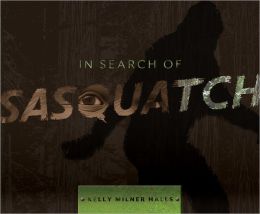
Well, I came across a book that would be an excellent middle grade fictional companion - The Abominables by the late Eva Ibbotson.

What a great way to tie in a wonderful read with science! Ibbotson's book transports five abominable snowmen to a stately home in England. These gentle Yetis have Mt. Helen's size personalities that kids will love!
A perfect pairing for gift giving or classrooms!
Subscribe to:
Posts (Atom)
Happy SEED SWAP DAY!
In light of the celebration of SEED SWAPPING DAY on January 31st, I'm posting this blog post again with a few updates -- so SEED ON! ...

-
 As programs are canceled throughout the country and modes of revenue dry up during this pandemic, here is a list of resources for freelance ...
 -
I love to travel. I'm one of those people that get butterflies of excitement anytime I am near an airport. I follow #roamtheplanet an...