I've decided to post the keynote address I gave at the Society of Children's Book Writers and Illustrators conference in Los Angeles. I made the decision to post this after reading another wonderful tweet about rejection from Jane Yolen, who I greatly admire. Her tweets inspired much of this talk.
Presenting this in front of my SCBWI friends and colleagues was an important moment for me after winning the Crystal Kite Award for SNIFFER DOGS: How Dogs (and Their Noses) Save The World.
I've added some of the slides so that you can see it in its entirety. I hope it moves you to think about why you write or gives you insight as to why I write.
The Terrifying Path To Publication And How It Ends
Good morning! I want to speak to you today about the terrifying path to publication and how it ends.
Every time I am fortunate enough to speak to a group of kids I share with them the way I catch my stories from bits of inspiration gathered from my childhood experiences and my present passions.


I tell them how reading a story in a local magazine about dogs who were sniffing out the poop of moose in the Adirondacks inspired my book Sniffer Dogs: How Dogs and Their Noses Save The World.

I talk to them about the dogs I met and photographed, and the adventures I had during my research.
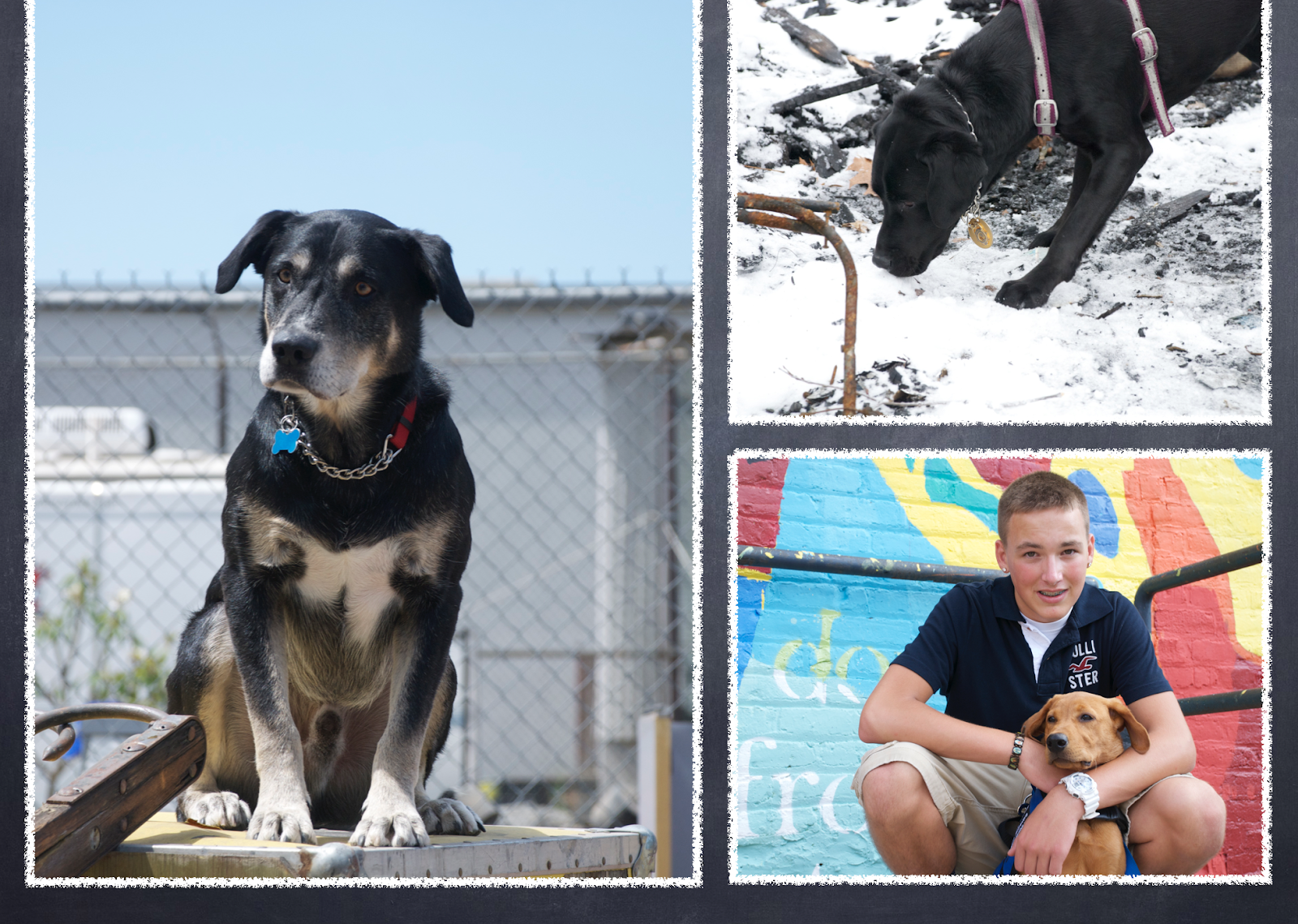

I tell them how similar my editor is to their teacher and how she helps me craft better sentences and a better story.

And then, a little like magic, I show them the finished book.

But I don’t share with them the rocky path that I and my fellow children’s book creators embark on, every time we sit at the keyboard, or the notebook, or the canvas - the path that leads us to the edge of insecurity and back again.
We children’s authors and illustrators are a brave lot. We have to strap on our big girl and big boy pants every time we sit down to work and enter into a world of endless rejection.
What are we told when we are starting out? That we have to not only READ but paper our walls with rejection letters. Ugh. We boost each other up at SCBWI meetings after each one is received. “Oh, no worries,” we say, encouragingly , “you are on the right path. The editor or agent wrote a personal note or they asked to see other work. Keep going.” This is the path. We all go through it.
And when we finally do get something accepted for publication, we still doubt our abilities at every turn. We hand in a completed manuscript or illustration and worry if the editor will like it, even after they have acquired it. We fret and try our best to create other things while we wait for their notes.
We breath a sigh of relief when they arrive and then begin fretting about the next stage. Will my revision be good enough?
I remember how comforting it was to hear that the wonderful Queen of Children’s Literature herself - Jane Yolen - was still receiving rejection letters even after all her awards and published books. We are not alone. It happens to all of us.
Do I tell those beautiful little faces during my school visits that Sniffer Dogs actually came about after two rejections from the same editor? No.
And every day, I read that I’m not alone in my insecurity and worry. There are many others.
Matt De La Pena even said in his Newberry Keynote address
“This job can be a lonely, lonely ride. And there are moments when it’s nearly impossible to maintain a belief in yourself. Ninety-nine percent of the time the words don’t seem quite good enough. Or the characters don’t seem quite real enough. Or, worst of all, you don’t feel quite talented enough.”

Carrie Jones, author of many wonderfully received titles, including Captivate, wrote one day on Facebook: “In the writing world, they call these pages - first pass proofs.In the Carrie Jones world, I call them - terrifying but done and on their way back to the publisher.” #timestoppers #amwriting #bloomsbury”

Well known nonfiction author Kelly Milner Halls wrote about an upcoming title on Facebook, “I've been holding my breath, waiting to see how the reviews would be. Kirkus was very good to me. But now Booklist has been as well. I hope School Library Journal will review it, too. And most of all, I hope kids will like it. But I'm thinking maybe I did a good job. : )”

Newberry author Linda Sue Park posted back in 2015 - “Yesterday, sent novel manuscript to editor. Today, feeling both lighter & heavier.

Many SCBWI tribe members struggle to create while working other jobs. Others wonder if they can make ends meet as full time creators. All the while meeting rejection and insecurity at every turn with the occasional cause for celebration. So, why do we continue?
“A writer is a writer because even when there is no hope you keep writing anyway”….Junot Diaz

Lin-Manuel Miranda, the genius behind the Broadway hit, Hamilton, was quoted in an interview, ”It's the tiniest grain of sand of time that we're allowed on this earth. And what do we leave behind?”
That quote goes hand in hand with a favorite of mine from poet, Mary Oliver, “Tell me what it is you plan to do with your one wild and precious life?"

That’s a question we all need to ask ourselves.
George Orwell wrote that we write for four basic reasons: sheer egoism, Aesthetic enthusiasm, Historical impulse, and Political purpose.
That might be so for many authors, but I disagree that these are the complete reasons we children’s writers and illustrators create. We create books for children and by doing so enter into a different mission and purpose.
As children’s writers and illustrators we do so much.
We all have the power to make a difference in the world – by picking up a pen or a brush we can empower children to see the world differently.
We can give them hope.

We can show them how to be kind.

We can make them comfortable

…and also uncomfortable.

We can encourage them to follow their dreams

We can help them act for change.

We can enliven their curiosity.

We can give them a voice.

We can demonstrate perseverance and overcoming obstacles.

We can even tickle out a smile in an otherwise difficult life.

And sometimes we are privileged to catch a glimpse of our work out in the world and hear from our readers.

Those readers are our future. They will become teachers, parents, thinkers, artists, leaders, doctors, engineers, chefs, and inventors.
Those small moments, those hugs at the end of a presentation, those tiny voices telling you how much they loved your book, those moments can drown all that insecurity and all that worry. It makes it all worthwhile.
It’s when we realize what a gift this struggle really is!
And how noble a calling we all have!
“Tell me what is it you plan to do with your one wild and precious life?”
Thank you!


