Showing posts with label Loree Griffin Burns. Show all posts

Sunday, March 1, 2020

Women's History Month - Gene Stratton-Porter, Loree Griffen-Burns, and Moths

It's Women's History Month! Hurrah, an entire month to celebrate the accomplishments of women!

I'd like to start with a look at an author who was extremely popular in her day, so much so that she wrote five bestselling books, selling more than other authors of her time. Nine of her novels were made into movies.

Geneva (Gene) Stratton-Porter was also an influential naturalist and conservationist who fought to preserve the Limberlost of Indiana.  After the Swamp Act was passed in 1850 government-owned wetlands that were "worthless" in the eyes of the government were granted to anyone who drained them. These natural areas were given to settlers who logged, farmed and drilled the land. Stratton-Porter wrote and photographed these lands before they were "shorn, branded, and tamed."

You might know her best from her book, Girl of the Limberlost. It's already celebrated its 100th anniversary (2009) and was made into a movie. It's the story of a young girl named Elnora who collects moths in the marsh Stratton-Porter worked to preserve.


Stratton-Porter then worked on the perfect companion book - a photography book that captured the moths she had written about in the place she loved. It became Moths of the Limberlost


Dig around the shelves of your local library this spring for these two wonderful books.

A portion of Stratton-Porter's Loblolly Marsh is preserved today in Indiana. When a 24-hour biodiversity survey was carried out on the site volunteers recorded 545 species: two bees, 55 birds, 29 dragonflies and damselflies, 24 moths and butterflies, one fish, 25 fungi, 15 reptiles and amphibians, two insects, five mammals, 376 plants and 11 sciomyzid flies. Although those numbers seem respectable, the quantities of Stratton-Porter's beloved moths and butterflies were much lower than she had experienced. This species decline has, sadly, been felt all over America.

This leads me to another author and another book celebrating moths. Loree Griffen-Burns has written a book Stratton-Porter would surely have loved. You're Invited to a Moth Ball releases in April! The book is beautifully illustrated with photographs by Ellen Harasimowicz.


This spring pull out a copy of Girl of the Limberlost (or watch the movie) with your young readers, hold your own nighttime celebration with Loree Griffen-Burns' You're Invited to a Moth Ball and spend an evening celebrating these fabulous women and the moths they love! Perhaps it will inspire you to help in their preservation too.

______________________________________________________________________________


Friday, June 8, 2018

World Ocean Day!


Happy World Ocean Day! 

Here are some titles to share with your budding oceanographers, including one of my early books that might be in your local library already - OCEANS: An Activity Guide for Ages 6-9! 


Thursday, December 28, 2017

Naturally Speaking About Butterflies

I visited the Daintree Rainforest in Northern Queensland, Australia in 2016, the oldest rainforest on the planet. What a treat for this author of RAINFORESTS An Activity Guide for Ages 6-9 !  

The Daintree is a tropical rainforest -- the perfect home to many butterflies. Visitors might spot the large, beautiful, green and black  Cairns Birdwing, the Cruiser Butterfly which has orange-yellow wings with a distinct pattern detailing on the edges, two varieties of Swallowtail, and one of my very favorites, the large, electric-blue Ulysses. All are amazing to see in the lush, green wilds of the rainforest. 


There are a few reasons why there are so many different species of butterflies in tropical rainforests. Once reason is that there are so many different micro-habitats, with their own micro-climates to support a variety of plants. There are butterfly species that live in the rainforest canopy, others that live in the sub-canopy, and still others that find their home among the plants in the understory. 

You might not live in the rainforest, but I bet you also have species of butterflies flitting around the plants on your rooftop garden, nearby park, or outside your front door.  

Years ago many people collected butterflies, but we know it is better to watch them fly in the wild and  serve out their role as important pollinators than capturing them for a collection. 

There are some things we can learn from observing butterflies in the wild.  I found a few of these on a sign in the rainforest: 
  1. Trust the future. 
  2. Embrace change.
  3. Put on your brightest color.
  4. Let your beauty show. 

Why not help the butterflies along in 2018 by planting your own butterfly garden. The winter is a perfect time for planning. 

Explore what native species of plants are appropriate for your local butterflies. You'll have to plant some that serve as food for hungry caterpillars and others that provide nectar for adults. You can plant your garden in a community garden, in your backyard, or in flower pots on a deck or balcony.  

Keep a journal where you can record the species that visit your garden. Draw pictures of the different varieties or take photos. It will be fun to look at each year as your garden matures and butterflies find it a perfect place to visit. 

Here are a few butterfly books you'll want to read: 


Tuesday, October 3, 2017

40 Gallons of Sap to Make 1 Gallon of Syrup -- Research to Book

It takes 40 gallons of sap to make one gallon of maple syrup. That's a lot of sap! It's not too different from creating a nonfiction book. It takes gallons of research to make one small book.


When I recently went to nErDcampNNE I brought one of my book boxes. Every book I create with Houghton Mifflin has its own box. Some boxes are bigger than others. They get filled with ticket stubs, receipts, articles, books, drafts, photo release forms, and all sorts of stuff that pertain to the writing of the book. They do NOT include all of the articles I have read online or in libraries, or the piles of books that I am not able to keep, including rare editions and such. It also does not include the hundreds of photos I take and download to my computer. 

It does take many "gallons" of research for each book. Every nonfiction writer will tell you the same thing. But we enjoy it! It's a treasure hunt -- an extreme sport  -- a time to EXPLORE! 

There are so many ways that teachers can spur on this exciting phase of writing with students. Loree Griffen Burns, Melissa Stewart, and I discussed having students interview each other, parents, teachers, and community members. Teaching students interview etiquette and how to write questions and ask follow-up questions is part of the learning process. 

Thinking of the research phase more like a quest than finding three sources for a project is the goal. Making discoveries and letting those discoveries lead to more questions and on to more discoveries is the joy we nonfiction authors feel every day. 

And then after all that research we have to distill it down  - just like boiling down the sap  - to find the  jewels we want to include in shaping the book we write. 

Ask any nonfiction author about their research and you will be in for a treat! 

Monday, June 23, 2014

Nonfiction Monday - Midsummer's Eve

Tonight is Midsummer's Eve! It is also called St. John's Eve, after St. John, the patron saint of beekeepers. This is a time when the hives should be filled with honey. One of the names for the full moon this month is the Mead Moon, because mead was made out of fermented honey.

So, I thought it would be a great day to blog about bees and books. As many of you know they've  hit a rough patch. Bees that is. Bees need some PR among other things. Forget the stinger, think honey!

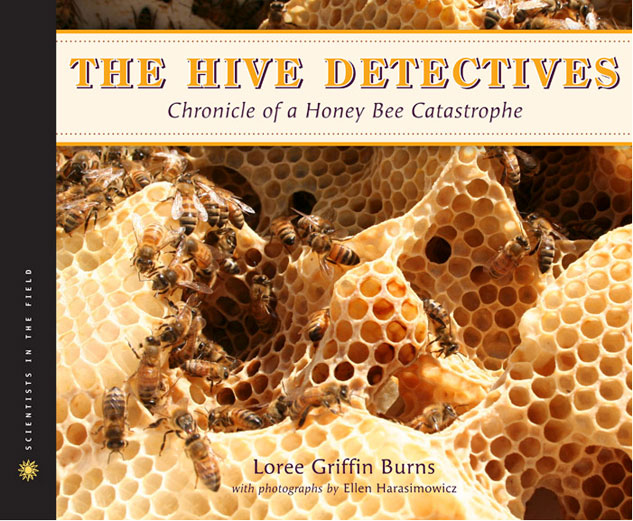
There are a ton of kids books out there about bees, but my favorite nonfiction read for kids is The Hive Detectives by Loree Griffin Burns.


Author Loree Griffin Burns not only presents the crisis honey bees are facing, but profiles the scientists and beekeepers on the front lines. The book has amazing photographs and should be in every classroom collection.

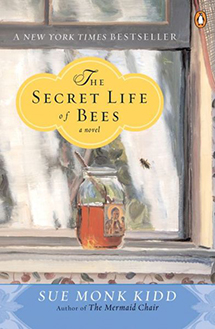
I know this is Nonfiction Monday, but I can't help noting two fiction titles.   The Secret Life of Bees by Susan Monk Kidd is a beautiful and perfect read for teens.


 And I'm excited to read The Bees by Laline Paull. It's gotten a lot of buzzzzzz.  It's got a strong dystopian feel to it and is actually set in a hive. Perhaps it will become a great crossover read. 


Happy SEED SWAP DAY!

In light of the celebration of SEED SWAPPING DAY on January 31st, I'm posting this blog post again with a few updates -- so SEED ON!  ...