Showing posts with label HMH. Show all posts

Wednesday, March 18, 2020

More STEAM Resources In the Time of COVID-19

Here are more STEAM resources for parents, teachers, and kids during this time of isolation. 


  1. Palm Oil Audit – Is your household making orangutan-friendly choices at the grocery store? Find out with this eye-opening activity.
  2. Happy Rhinos – Build a rhino-safe enclosure and connect kids to endangered species using design thinking and language arts.  
  3. Ocean Clean-Up Design Challenge – Create a device that will clean up our oceans.
  4. Aging Plastic Experiment – Does plastic every go away? Try this experiment to find out. 
  5. A Language of Your Own - Elephants use many different sounds to communicate emotion. Challenge kids to use sounds and movements to convey emotions (fear, greeting, sadness, excitement, warning, surprise, etc.) without using words. Guess what emotion they are trying to convey.
And for more --check out Patricia Newman’s LitLinks blog series that highlights the connection between STEM and language arts using children’s books: https://www.patriciamnewman.com/blog-4/

~~~~~~~~~~~~~~~~~~~~~~~~~~~~~~~~~~~~~~~~~~~~~~~~~~~~~~~~~~~~~~~~~~~~~~~~~~~
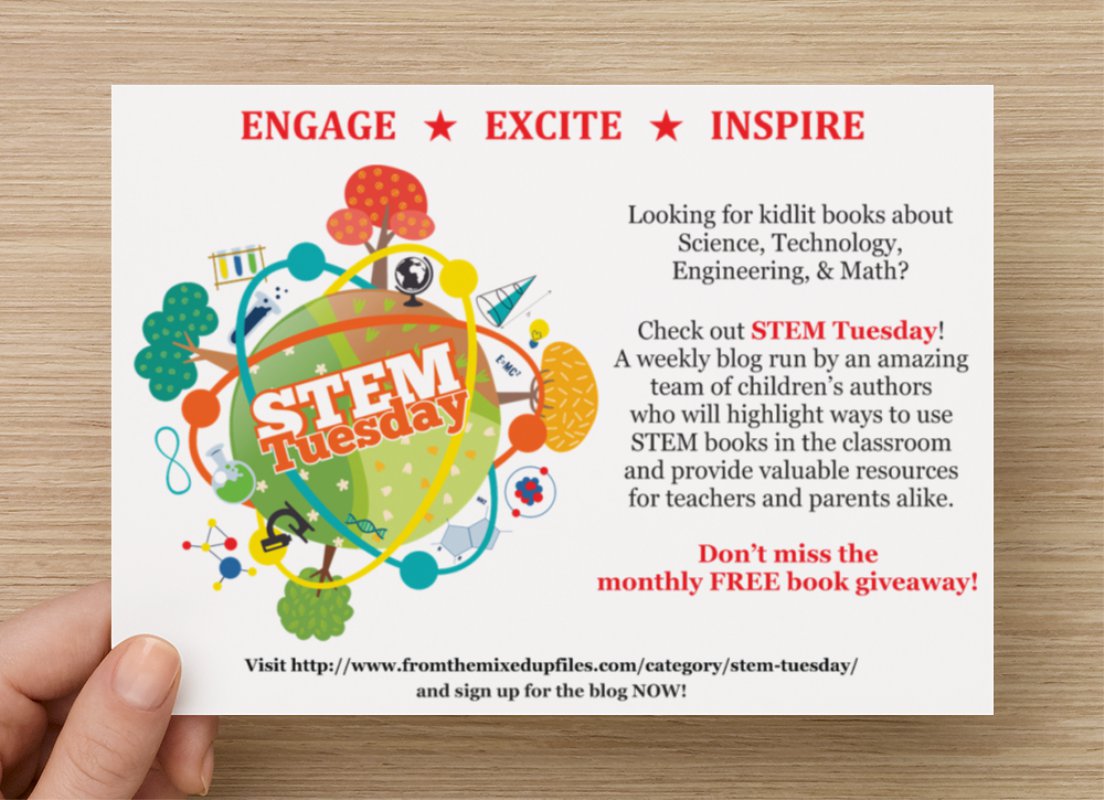
Patricia and I contribute to another great resource  - STEM Tuesday, where you'll find middle-grade STEM monthly book lists and activities for home and classroom. 

~~~~~~~~~~~~~~~~~~~~~~~~~~~~~~~~~~~~~~~~~~~~~~~~~~~~~~~~~~~~~~~~~~~~~~~~~~~

Here's a great video from picture book author Randi Miller Sonenshine to pair with THE NEST THAT WREN BUILT:


And a STEAM activity too!

~~~~~~~~~~~~~~~~~~~~~~~~~~~~~~~~~~~~~~~~~~~~~~~~~~~~~~~~~~~~~~~~~~~~~~~~~~~~~

For BACK FROM THE BRINK readers -- YOUR VOICE MATTERS: 


Be well, readers! 

Tuesday, April 24, 2018

Back From The Brink Book Birthday!

It's here! Today is BACK FROM THE BRINK's book birthday!

As my author friends know, this is a major event. We celebrate milestones in a book's creation. For me, it starts with the acceptance of a proposal from my publisher. The next milestone, for one of my nonfiction books, is the completion of the first draft, followed by a bunch of small milestones that aren't celebrated with the same fervor, but might just be marked by a piece of chocolate or a glass of wine or a walk outdoors. The final milestone is the release of the finished book out into the public -- THE BOOK BIRTHDAY!

As with all books, it takes a village to get to this day. In my case, a fabulous agent named Jennifer Laughran, who I adore, an editor who always seems to get me and what I'm trying to say, named Erica Zappy (Like I say to students during my school visits - she's the one who really helps make my book the best it can be), and countless others along the way, including copywriters and book designers, who are invaluable. (Not to mention...all of the dedicated scientists and conservationists who I wrote about in the book!)

Today is THAT special day. BACK FROM THE BRINK is now out in the world and on Saturday I'll be celebrating that birthday at Oblong Books and Music in Rhinebeck, NY with a launch celebration!

I can't wait to see this book out in the wild, in the hands of my readers. If I've succeeded, the stories I've included of these endangered species will bring them hope and inspire them to care for our planet.


Here is what the reviewers have said (And yes, if you are wondering, waiting for reviews are the hold-your-breath-moments of book creation):

"[Castaldo] offers solid, meaningful suggestions for young readers [...] including many, many learning opportunities: things to watch and read, organizations to investigate, websites and parks to explore. Challenging but important reading for the intended audience."--Kirkus, STARRED review 
 "An intimate and optimistic look at humans’ ability to protect the planet’s biodiversity."--Publishers Weekly 
 "Readers will be moved by Castaldo’s appreciation for these animals."--Booklist, STARRED review 
 "Middle school students will find this a topical, timely affirmation that nurturing the planet’s biodiversity is not a lost cause."--School Library Journal
I do hope you enjoy it. Please let me know if you do! Thanks for reading! 

Monday, April 23, 2018

Get Ready for Endangered Species Day!

Earth Day 2018 is over, but you can continue to spread the love of nature and our environment with Endangered Species Day - May 18, 2018.  Start planning now to make an impact this year. 

This is an international celebration of endangered species. It's an ideal day for teachers and community leaders to educate students about the importance of protecting the Earth's biodiversity. 

There are so many ways to engage in the celebration. Here are just a few:


*Plan a school-wide Endangered Species Day fair with exhibits.
*Arrange a special display in the school library or cafeteria.
*Invite a local expert to speak to the school/class.
*Work with a community/environmental group on a habitat restoration project.
*Attend an event at a local zoo, aquarium, botanic garden or other location.

Once a specific activity is planned, your class can register it on the Endangered Species Day website.


Read more about how we can join together to save endangered species in BACK FROM THE BRINK, releasing tomorrow from Houghton Mifflin Harcourt


SaveSave

Sunday, April 22, 2018

Earth Day - 7 Things Kids Can Do To Help Endangered Species


Happy Earth Day! 

      Today is the day to think of the ways we can contribute to the health of our planet. You can make a difference by helping endangered species. It doesn’t matter where you live or how old you are, every choice we make impacts our environment and the wildlife around us.
     Here are seven ways you can help today and everyday:

Learn About Local Endangered Species — It is hard to help creatures we know nothing about. Find out what animals might be having trouble where you live. Pick one and become an expert. Spread the news about it and how we might be able to keep it safe! You might even be able to volunteer in a local nature center or wildlife refuge. 


Throw Micro Trash In The Trash!  — Tiny items of trash, like bottle caps and small pieces of plastic are harmful to many species of wildlife. It’s hard for an animal to tell the difference between a piece of food and a piece of trash. Sea turtles and California condors are just two endangered species that suffer from tiny bits of litter. You can help by spreading the word and making sure that micro trash finds its way into the trash! 

Conserve Energy!  — Every time we use energy, we add pollution to the environment. You can help by turning off the lights when you leave a room, by carpooling with your friends when you go somewhere, and even buying less stuff wrapped in plastic. Every small thing you do can bring big results if we all work together. 

Be Wildlife Friendly — Make your home wildlife friendly by placing decals on your windows to prevent birds from flying into the glass, planting native plants that provide food and shelter for wildlife, and by keeping your home pesticide and herbicide free. Also, keep cats indoors. Many birds and small animals are killed cats each year. These easy steps make a huge impact in the lives of your local wildlife! 

Take the Plastic-Free Challenge —  Did you know that people produce millions of tons of plastic garbage every year? That includes plastic bags, plastic drinking straws, water bottles, coffee stirrers, and all sorts of packaging that we use only once and then throw out. All of this garbage ends up in our landfills and our waterways. It not only harms wildlife, it also harms us. You can make a big difference if you swap out your plastic for reusable glass bottles, cloth bags, and recycle the plastic you do use. So the next time you order a beverage in a restaurant, ask for a glass and don’t use a straw.  

Campaign for Wildlife!  — Write a letter to your local newspaper about endangered species. Attend a town board meeting and speak up for wildlife. Create a website to promote conservation. Join an environmental organization. Become a voice for the creatures you care about. 

©Nancy F Castaldo

Pay Attention — Sometimes we just don’t know what’s going on until it is too late. If you start to pay attention to the plight of endangered species and other wildlife you’ll be one step ahead. Once we know what is happening we can take action and together we can make a difference. Become informed and stay informed. And when you are old enough — VOTE! Voting is an important way to make your voice heard. 

We can make a difference if we all work together. Perhaps, then we can even prevent animals from becoming endangered in the first place. 
Earth Day, Every Day! 


Friday, January 12, 2018

Sniffer Dog Super Powers


One of the most interesting stories I wrote for SNIFFER DOGS is the story of Zuma and Jax. Both are trained forensic sniffer dogs. These dogs sniff out OLD BONES. They can find ancient Native American burial sites, missing cemetery plots, and cremation remains, and know the remains are human. Pretty incredible! 

I watched and wrote about Zuma, a beautiful border collie, locating a small amount of cremation remains -- basically human sand -- in the woods of North Carolina. 

Zuma from Sniffer Dogs (HMH)


If that isn't mind blowing enough check out what Zuma’s teammates are doing in California after the horrific wildfires. 

Imagine having your house burn to the ground with all of your belongings, including the cremation remains of a beloved family member. Just heartbreaking. Well, Zuma's team of forensic sniffer dogs can actually find those treasured remains (cremation ashes) among all of the ashes of everything else in the house that burned. 

These aren't the only detection dogs in the news. Other dogs are searching today for people missing in the California mudslides. 


The skills of sniffer dogs are endless. I am proud of these working canines and their dedicated handlers, and so privileged to have spent time with many of them. 


If you'd like to find out more about sniffer dogs, check out my book and these additional tittles: 


Monday, May 15, 2017

Book Shopping - Our History with Dogs

As you know, I love dogs, so I was extremely happy to find these two titles waiting on the bookshelves in my local indie! Hudson Talbott and Kay Frydenborg have written titles about our long history with our fuzzy friends. They are the perfect pair for a young reader and an older sibling or parent. 


I had the pleasure of speaking with Hudson and Kay about their books. 

 Dogs truly are our best friends. Your book delves into the history of our strong relationship with our fuzzy friends. What was the most surprising thing you discovered about our history with dogs while crafting your book?

Hudson:  Hard to say which is the MOST surprising thing as there are so many!  
The first that comes to mind is that the alliance is so ancient - primordial really. Evidence has been found that dates at least 30,000 years. That's about 25,000 years more than the connection to cats. There is even evidence that suggests much earlier - to contact between homonids(pre-humans) and wolf ancestors. It's conceivable that the two species evolved in tandem to some degree. Humans obviously affected dogs' evolution but it's possible that they affected ours too.

Kay:   Thanks so much for asking, Nancy! There were so many surprising things I learned while researching A Dog in the Cave. The first thing was how far back our intimate relationship with dogs (beginning with wolves) goes—more than 30,000 years, scientists now believe! That's a lot longer than was believed until just a few years ago. Another amazing thing involved the genetics of our coevolution with dogs.For example, areas of our own brains involved with scent recognition actually shrank because our dog friends kind of “took over” some of that function; at the same time, our human brains became even better able to reason and plan actions that benefited both  our dogs and ourselves, and dogs’ cerebral cortexes shrank somewhat because those “executive functions” were taken over to a greater extent, by humans. 
The other thing that I loved most about what I learned was more of a narrative thing. I was captivated by the image of our prehistoric ancestors and how they began living with another wild predator with whom they might just as easily have killed, or who may have equally easily have killed them. I learned that our ancient human ancestors were not, in important ways, so different from us. To me, the fact that a large dog may have walked with a young boy through Chauvet Cave in France really set my imagination on fire.


Do you have a favorite dog in your life? 

Hudson: I have a cat who behaves like a dog to humor me. He seems to know that I'm really a dog person and would have them if I didn't travel so much. Cats love humans to but, being cats,they know how to make do if their human isn't around. Dogs just can't be without their human for long - the price of being "hard-wired" into our species, perhaps. 


Kay: I have had dogs in my life for my whole life, and can't imagine living without them. My current favorite dog is Saada, who is a mostly Rhodesian Ridgeback we adopted from the Ridgeback rescue several years ago. She is the sweetest, funniest dog ever, a beautiful brindle color, and weighs a little over 100 pounds. I also am fond of our other dog, Junie, who is a smallish pit bull mix that our son rescued off the mean streets of Los Angeles and airlifted to us here in Pennsylvania when she was just a puppy. She has definitely kept us on our toes over the years since; even though she and Saada had some rocky times together, they are now the best of friends.


Thank you both for sharing your research and your dog tales with us! 

Find A Dog In The Cave and From Wolf to Woof at your local bookstore! 


Happy SEED SWAP DAY!

In light of the celebration of SEED SWAPPING DAY on January 31st, I'm posting this blog post again with a few updates -- so SEED ON!  ...