Monday, June 23, 2014

Nonfiction Monday - Midsummer's Eve

Tonight is Midsummer's Eve! It is also called St. John's Eve, after St. John, the patron saint of beekeepers. This is a time when the hives should be filled with honey. One of the names for the full moon this month is the Mead Moon, because mead was made out of fermented honey.

So, I thought it would be a great day to blog about bees and books. As many of you know they've  hit a rough patch. Bees that is. Bees need some PR among other things. Forget the stinger, think honey!

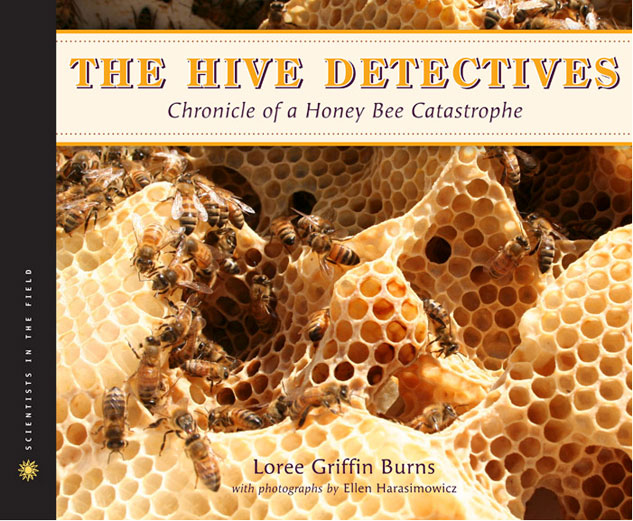
There are a ton of kids books out there about bees, but my favorite nonfiction read for kids is The Hive Detectives by Loree Griffin Burns.


Author Loree Griffin Burns not only presents the crisis honey bees are facing, but profiles the scientists and beekeepers on the front lines. The book has amazing photographs and should be in every classroom collection.

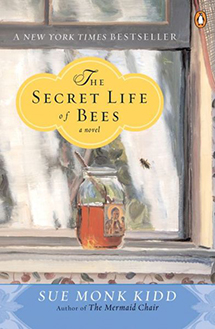
I know this is Nonfiction Monday, but I can't help noting two fiction titles.   The Secret Life of Bees by Susan Monk Kidd is a beautiful and perfect read for teens.


 And I'm excited to read The Bees by Laline Paull. It's gotten a lot of buzzzzzz.  It's got a strong dystopian feel to it and is actually set in a hive. Perhaps it will become a great crossover read. 


Friday, June 20, 2014

Eco-Fiction Friday! Interview with Eliot Schrefer

I had the opportunity to meet and speak with author Eliot Schrefer at the Red Hook Book Festival. His book, Endangered, was a National Book Award Finalist for Young People's Literature. It also garnered a starred review in Publishers Weekly and praise from Kirkus, ALA, NPR and a host of others. All well-deserved!  


Endangered is a compelling story set in war-torn Congo. Please share with us your experiences researching this story in such a dangerous place?

First, I want to say thanks for having me! It’s a treat to visit your blog. To answer your question, I traveled to a sanctuary for orphaned bonobos, called Lola ya Bonobo (“Bonobo Paradise” in the local language, Lingala), in order to research the book. Though I was visiting Congo, I think of it as “Congo Lite.” They picked me up from the airport, I stayed on the sanctuary grounds for two weeks, and then they drove me back. It’s a beautiful, well-run place. Each morning I would spend time with the orphans, then I would write in the afternoons. It was great to be able to spend extended time with them—what changed most during my research were the physical details, what bonobos feel like or even smell like.


What inspired you to write about bonobos?

A pair of pants! I bought a pair of Bonobos brand khakis, and thought it was a nonsense word. Then I looked them up and learned about this fourth great ape that I’d never heard about before. Once I knew their connection to us (98.7% DNA overlap) and their plight (struggling to survive in central Congo) I realized there was enough thematic information to write a novel.

You’ve managed to weave in so much information about the science of bonobos and their status in this novel without any “information dumps”. What challenges did you experience in doing this?

I always hate in a movie when the main character happens to walk by a college lecture hall, and pauses for a minute to hear whatever the academic is lecturing about—which is, of course, always germane to the movie’s events. Books have a little more leeway, I think, because there’s a chance to hear a character’s internal thoughts. But all the same, as you say, info dumps are a real problem. Most of the research that I was able to work into the book was about their physical lives—how they nest, how they fight, the texture of their hair, etc.—because those were things Sophie was observing, herself. I tried to minimize times where I’d go “Sophie remembered reading that...”. All the same, I think readers love feeling like their gaining new information. It just has to be presented inconspicuously.

Your next book, Threatened, focuses on another primate. Can you share the differences you encountered with your research on this book?

Threatened is about chimpanzees, and anyone who’s read Endangered knows they come off as villains there. But what helped me come around to them immensely were the memoirs of Jane Goodall. She writes about generations of the Gombe chimps she studied in Tanzania, and their stories are totally gripping. Her writing really encouraged me to look at chimp behavior as family stories above all. One chimp’s welfare has everything to do with how it was raised.

*Starred reviews from both Kirkus and Publisher's Weekly


What’s next for your readers?

I’m hard at work on the next ape novel! The orangutan book will be out fall 2015. It’s about an orang who’s been raised in the states alongside a human boy. I’m also writing an installment of the Spirit Animals series of books—mine will be out in January 2015.

I’m sure readers will be interested in learning more about the plight of these extraordinary primates. Can you point them to any organizations for more information?

Absolutely. There are two main organizations that work on bonobo welfare. One is Friends of Bonobos (www.friendsofbonobos.org <http://www.friendsofbonobos.org> ), which helps run the sanctuary where I stayed in Congo. Another is the Bonobo Conservation Initiative (www.bonobo.org <http://www.bonobo.org> ), which works on keeping the wild bonobos alive and well. Both very worthy organizations.


Thanks again for having me, Nancy!


It's been a pleasure, Eliot!  For more information about Eliot and his books check out his website. 
Friday, June 13, 2014

Community Garden - Reads and Weeds

I love my plot in our community garden!

Everything is doing well. The kale and swiss chard have taken hold and are loving the weather. The tomatoes are flowering. And my squash is spreading.  Along with all that growth came a new batch of weeds. Since this garden was left untended last year it needs a little extra loving this season.

Weeds compete with your plants for nutrients and water.  I've been hand-pulling pretty regularly to keep it clean. I will need to get back on it soon since we've had a rainy week.

In between the rain and the weeding there's always reading! Here are some of my favorite garden reads for kids.
Sharon Lovejoy's classic! 

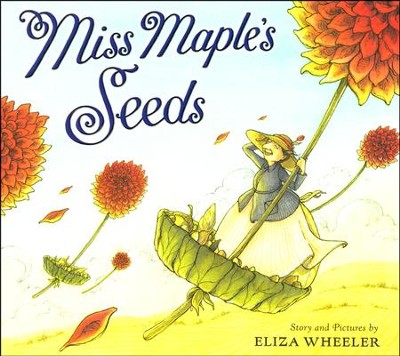
Miss Maple's Seeds

A Seed is Sleepy


And be sure to check out Jane Goodall's Roots and Shoots Organization for some great community projects. 


Tuesday, May 20, 2014

Community Garden - Seedling Shopping Day!

The garden has been weeded, tilled and raked. It's set to plant! But with frost warnings popping up throughout the month I haven't planted anything yet.  It's now May 20th and it's finally warm enough. Seedling shopping day!

Shopping List:

Zucchini
Basil
Black Cherry Heirloom tomato
Sungold Heirloom tomato
JalapeƱo
Cilantro
Swiss Chard
Russian Kale
Mixed zinnias

Tomorrow - Planting day!!!!

Tuesday, May 6, 2014

Community Garden Day 2

Every garden owner must sign up for a time to mow the pathways. This was our week.  Nancy went down ahead of me and did it. Not only did she take care of the mowing, but she tilled our plot. YAY NANCY!!!   I was left with some clean-up -- and the raking and leveling. It looks ready to go - we just need to plan it out now.

I've been researching some varieties that work well in our area. So far on my list - Russian or green kale, zinnias, and zucchini.

More to come!  

Monday, May 5, 2014

Community Garden Day 1

My friend and I decided to join our community garden this year. We both have enough land to have our own gardens at our homes, but the community garden offered us a lot of benefits. First, it's already established. It has a fence to keep out animals and a shed for equipment - which includes a tiller, a lawnmower, shovels, hoes, rakes, etc. Everything is right there! It's also in an accessible location in the village.

Well, we found out another huge benefit yesterday afternoon. The community! It was our first scheduled work day and we really weren't sure what to expect. I came prepared with some hand tools and gloves ready to get to work.

Our garden was a mess - very overgrown. It had not been tended for over a year.

Our garden  - The Before photo! 

The well tended plots near ours. 

In need of LOTS of work.


The sky was clear when we arrived at 4 pm, but there had been a downpour within the hour. It made the ground easy to dig and we got to work right away. Soon other gardeners arrived and they all grabbed tools and headed over to our plot. We were the "newbies" and they were all there to help us get it in shape for the season!

Before we knew it there were 8 of us digging weeds and clearing the ground. Now that's community! 

It rained. It cleared. And it rained again. Wheelbarrow after wheelbarrow was filled and dumped.  By 5:30 pm we were weed-free and level! 

The Community Garden

That's us - Nancy and Nancy  - The after picture - In the rain. 

Almost ready for planting!
What a great experience! I've always hated weeding. It was one of my childhood chores and I actually paid other kids to help me get it done.

 This weeding project was actually FUN!  Next up for us - Garden planning and planting!

I'll keep you updated! 

Sunday, April 6, 2014

Climate Change Refugees

I am outraged.  I found this little story today about a small island in Papua New Guinea. The article took up just a few paragraphs and it probably won't make the national news. But, in fact it is a huge story.

This little island was predicted to be completely underwater by 2015, but it's happening now. King tides have already washed away their crops and the rising sea water has poisoned the remaining ones with salt. The 2000 people living on this island have been forced to leave, making them the first refugees of climate change.

I know there are still a bunch of you out there claiming that there isn't such a thing as climate change.  Tell that to the 40 families who have lost their village and their way of life.

This is happening folks. And it should be front and center news - especially this close to Earth Day.


Wednesday, March 26, 2014

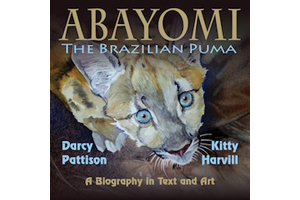
Interview - Darcy Pattison Talks About Her Latest - Abayomi


Darcy Pattison, author of Wisdom has a new book to share with us, Abayomi. This latest tells the tale of a Brazilian puma. It's equally captivating and a great addition to classroom bookshelves. 

Thanks for chatting with us today, Darcy. 

Wisdom was such an extraordinary story. What inspired you to write about this puma - Abayomi?

             I learned about Wisdom, because she’s the oldest bird in the world and survived the Japanese tsunami―that made the national and international news. Abayomi is a story that was brought to my attention by the illustrator, Kitty Harvill. She lives in Brazil half the year and the US the other half. She and her husband Christoph Hrdina are vitally involved in conservation in Brazil and heard about the work of Sergio Ferreira and Marcia Rodriguez, Ph.D. Their expertise is puma (mountain lion or cougar) conservation, where they are working to create corridors for pumas to move from one wild place to another. Corridors are cutting edge environmental science, designed to give them ways to travel in a wider landscape, enlarge their range, and protect the genetic viability of a species.
             In the midst of this work, came the story of an orphaned cub. As sad as the situation was, a story of an orphaned cub alone wasn’t enough. I had to dig deeper to find the story within the facts. For me, it was a combination the natural history of pumas, this particular moment in time when conservation corridors are crucial to many species, and the interaction of scientists and pumas. In particular, I was struck by one comment that came from my initial investigation. One plantation owner said that he had lived in the area for forty years and never seen a puma.
 40 years! The puma were invisible. Nocturnal animals, they hunt, eat and play under the cover of darkness.
             Then a scientist made the comment that the puma cub mustn’t get to know humans well or become dependent on humans for food. I realized that for the cub to return to the wild, the scientists must become invisible. That contrast sparked this story.


 One of the things I love about writing nonfiction is the research portion. Tell us about the research  journey for this book.  Was it a straight path or did it have lots of twists and turns?

             Research for this path started with an initial investigation of the events that orphaned the cub. The mother puma was caught in a trap set in a chicken coop and died. I had the actual coordinates for the chicken coop and looked it up on Google Earth. Yes! I could actually zoom down and see the chicken coop in the aerial photo. Then, I zoomed out to see the surrounding area. It was urban. On Google Earth, people often upload photos and you can click to see the surrounding area. One photo was taken quite close to the chicken coop, and showed a skyline of skyscrapers. These pumas were living within sight of skyscrapers.
             I learned that around 2012, the world tipped: worldwide, we are now more urban than rural. Pumas living within sight of skyscrapers exemplified the problem. How can humans make room for wild creatures in an urban world? In this man-made landscape, where can wild animals live? Increasingly, I realized the importance of the corridor science.
             Finally, I read and read about pumas and their natural history. One interesting thing that has allowed them to survive in the urban landscape is they are opportunistic eaters, that is, they will eat almost anything. Including capybaras, the largest rodent in the world and a common animal in Brazil. Capybaras are a host to a certain kind of tick, which carries Brazilian fever (comparable to the US Rocky Mountain spotted fever). Incidence of Brazilian fever has been rising dramatically the last 5-10 years. The complicated food chain―ticks, capybaras, pumas―meant that ticks were the puma’s friends. Conservation efforts got a boost because in order to reduce Brazilian fever, you must get rid of capybaras and for that, you need pumas. It was a round about research process and I spent time getting to know ticks and capybaras more than I wanted!
 Finally, I Skyped with Sergio Ferreira to make sure I had details correct. He was generous with information and added details that I couldn’t get any other way. First-hand knowledge is always best for nonfiction.

   Tell us about the teaching materials you have created for your books.
 
The back of the book includes a short discussion of our Urban World, facts about Corridor Projects and of course, information on Abayomi. Beyond that, I haven’t done a formal teacher’s guide for this book. For updated information on Abayomi, see www.icmbio.gov.br/corredordasoncas <http://www.icmbio.gov.br/corredordasoncas>

 What’s next for your readers?

Kitty Harvill and I are vitally interested in doing more biographies of wild animals. But it’s hard. We need information on a specific animal, not a species in general, and how it has intersected with humans. Kitty uses original photography to create portraits of an individual. Scientists are amazed that she can capture the nuances that let them recognize a particular individual animal.
 We are very interested in an American wild eagle or other endangered animals in the U.S. The key is that it must be one individual and there must be a compelling story. If anyone knows of an interesting eagle or other animal, please email me at darcy@darcypattison.com


Besides the animal biographies, I’m also working on a set of two books, I WANT A DOG: My Argument Essay and I WANT A CAT: My Argument Essay. Illustrated by Ewa O’Neill, they follow the reasoning of cousins Juan and Mellie as they consider what kind of animal they want. While it’s fiction, the science of dog and cat breeds forms the backbone of the story.

Thank you, Darcy! 
Find out more about Darcy Pattison and these titles: http://www.darcypattison.com

Friday, February 14, 2014

Love the Earth this Valentine's Day

It's Valentine's Day and what better way to show our love for the environment than to become inspired by someone who has dedicated their life to it?


Jane Goodall, featured in many books, has inspired me and so many others. Check out this video.
It will bring tears to your eyes and put hope in your heart!

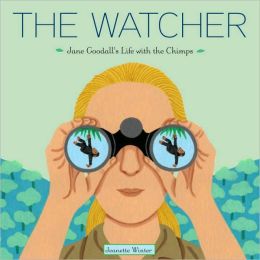
Bring Jane to your classroom with these wonderful titles.


And this one.


"Only if we understand can we care. Only if we care will we help. Only if we help shall all be saved." ~Jane Goodall


Happy Valentine's Day!  

Monday, January 13, 2014

Interview: Melissa Stewart, Author of No Monkeys, No Chocolate

 Melissa Stewart is the author of many fantastic nonfiction books on topics ranging from deadly predators to earthquakes.  With her recent picture book, No Monkeys, No Chocolate, she takes readers to tropical rainforests, the very source of the chocolate we eat. If you like chocolate, you’ll love this book!  It even has wise-cracking bookworms that comment on everything. 


Thanks, Melissa, for speaking with us today about No Monkeys, No Chocolate.

 
Can you tell us about the process of writing this very kid-friendly text with a leading scientist?
Thanks so much for your kind words about No Monkeys, No Chocolate, Nancy. This book was 10 years in the making. I thought kids, teachers, and aspiring authors might be interested in the story behind the book, so I created a fun Interactive Timeline. 

Allen Young is the world’s leading expert cocoa growth and pollination. He didn’t actually do any of the writing, but he did provide key bits of information that I couldn’t get anywhere else. His knowledge was based on working with cocoa trees in the Costa Rican rain forest for more than 30 years.

The bookworm narration adds a wonderful dimension to the text. Was that fun to write?
I had a blast writing the bookworm dialog. The trick was to keep the exchanges short while also making them funny and packing them with information that reinforced the main text.

No Monkeys, No Chocolate is chock-full of great information. Did anything surprise you in your research?
There were so many surprises. Before I began working on this book, I had no idea that a tiny fly pollinates cocoa or that monkeys and a couple of other small mammals disperse their seeds.

I also learned lots of interesting information that didn’t make it into the book. There were many different candidates for the spots occupied by the anole lizard and the coffin flies. Each one had an interesting relationship to the tree responsible for our favorite dessert. In the end, I chose the coffin flies and their brain-eating maggots because they are just so gross and cool. I chose the lizard and aphids, as a tribute to the rose-slurping aphids that inspired me to write the book in the first place.

I’m sure teachers would love to add this to their library. Do you have any tips on how teachers can use No Monkeys, No Chocolate in their classroom?
Yes, I have a Teacher’s Guide, Readers Theater, and several activity sheets that go with the book. You can find them here.  Also, the book was featured on the ClassroomBookshelf blog, where three super-smart educators from Lesley University offer lots more ideas. They’ve even included some ideas for using the Interactive Timeline in the classroom.

What are you working on now?
My newest picture book,
Feathers: Not Just for Flying will be published in February, and I’m very excited about it. Illustrator Sarah S. Brannen did a fantastic job. Right now, I’m working on a video to go with the book. I’m also putting he final touches on the Teachers Guide and a Readers Theater that I think teachers will really like.


To learn more about Melissa and her books visit her
website  or her blog  You may also want to follow her on Twitter, @msterwartscience, or on Pinterest.


Thursday, January 2, 2014

Ookpik

My family took a ride yesterday near the Hudson River after our yummy New Year's lunch.  There in a tree beside the water were two beautiful bald eagles. What a treat!  The perfect way to start off 2014.

Have you ever gone birding?  Well, if you have, you know that birders are a friendly bunch. We got chatting with some as we marveled at the birds perched near us. They shared the news that some snowy owls were spotted not far away.  We jumped in the car and sped off to find them.

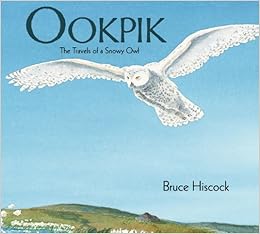
Now let me back up a bit.  Owls have always been special to me.  It started with this book.

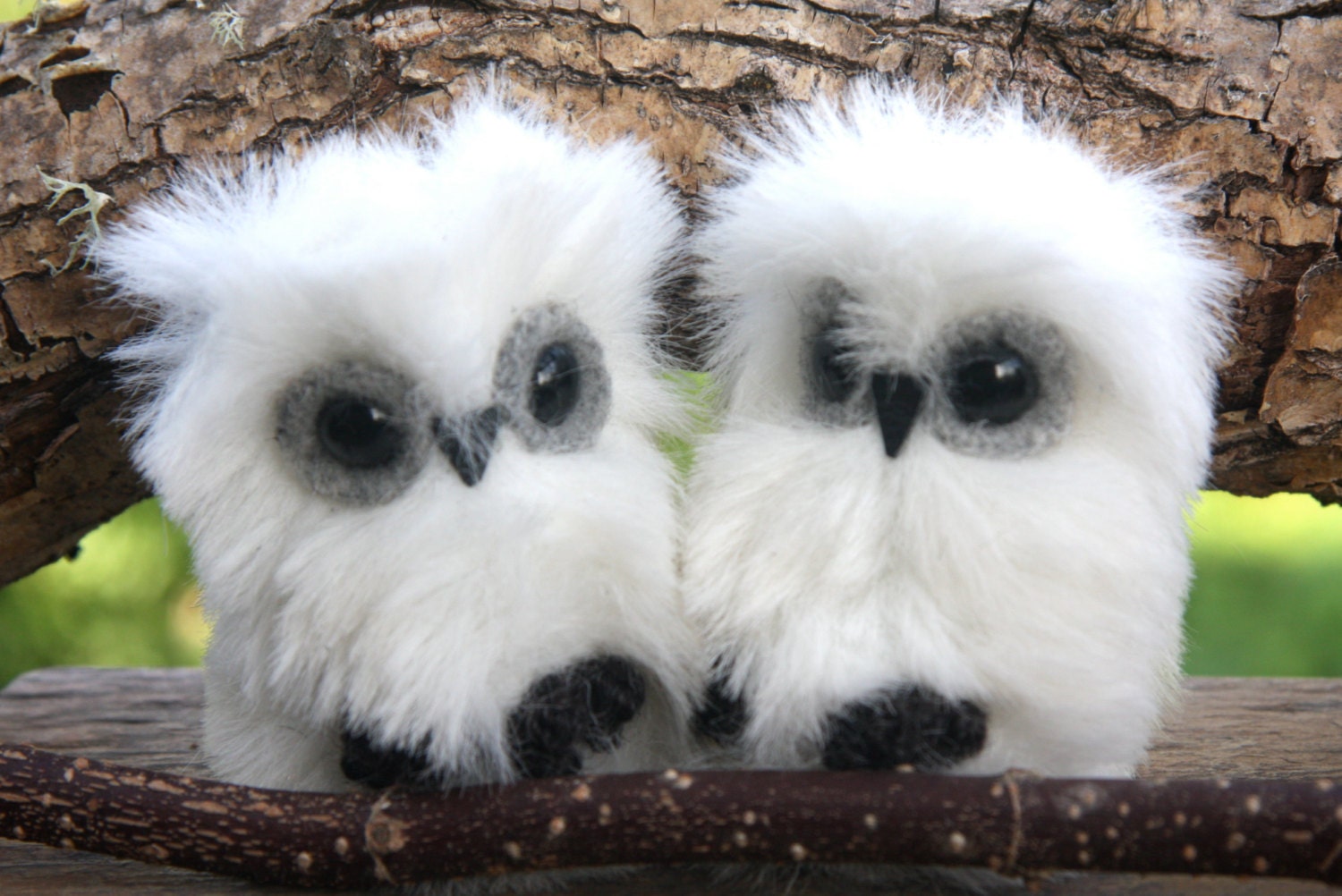
I even had a small ookpik (Inuit for owl)  stuffed toy that I kept until my dog ate it after I was married!  It looked like this:


As an environmental educator I became friends with a live barred owl.  Barred owls are locals.  I can hear them outside when I walk my dog and can hoot the "who-cooks-for-you" back to them. 

And then, thanks to Jane Yolen, there was Owl Moon. It quickly became a favorite book to read to my young daughter and a signed copy sits on my shelf! 

So, let's get back to yesterday. Snowy owls are not locals. They're birds to add to your life list.  They're the ones you drive to find.  But, we were just heading out after lunch…..without binoculars or a long camera lens.  We took our chances and followed the directions. Lo and behold we weren't alone.   Other birders had gathered and, as I said, they are a friendly bunch! Not only did we see a magnificent snowy, but we were able to get a closer look with a borrowed peek into a scope.  And we snapped a few photos through the scope using our cell phones.   

Here was Ookpik all grown up!  


There have been other sightings of snowy owls in the northeast recently.  I'm going to keep my eyes open and see if I can spot another before they head back to the frozen north. If you want to learn more about these magnificent birds check out author /illustrator Bruce Hiscock's wonderful picture book or take a look at this National Geographic link.  


Happy SEED SWAP DAY!

In light of the celebration of SEED SWAPPING DAY on January 31st, I'm posting this blog post again with a few updates -- so SEED ON!  ...