I just read a blog about how important it is to read science stories to your daughter. I completely agree! Pull out the nonfiction alongside the fairytales!
I also feel it is equally important or more important to encourage your daughters to be curious learners. Read the books, but also get them outside to enable them to have their own experiences with the world around them. Take them on walks in the woods. Show them how much fun a museum can be. Listen to all kinds of music. Providing your daughter with all of those experiences will help them conquer anything that comes there way. Teach them to question. And also show them that there is hardly ever one right answer (except in math). Even science doesn't answer everything.
Explore books of all kinds. Read the fairytales and come up with different endings. And yes, pull out the nonfiction, but don't just read it - explore it!
Wednesday, February 4, 2015

Monday, November 17, 2014
Jip - Doctor Doolittle's Amazing Sniffer Dog
When I was a little girl I was entranced by Doctor Doolittle. It wasn't a crush or anything. I just wanted to be like him. I wanted to talk to animals too! I studied animal behavior in college and even wrote on animal communication, but alas, I could never talk to animals the way he could. He was a super hero!


Last week I listened to Doctor Doolittle while I was driving to and from our Falling Leaves writing retreat. Of course it was different from the movie, but it was still magical for me. And guess what? It features one of the best sniffer dogs in literature -- Jip!
Here's one of my favorite paragraphs about Jip's sniffing:
"Jip smelt the ring and said,
"That's no good. Ask him if he has anything else that belonged to his uncle."
Then the boy took from his pocket a great, big red handkerchief and said, "This was my uncle's too."
As soon as the boy pulled it out, Jip shouted,
"SNUFF, by Jingo!—Black Rappee snuff. Don't you smell it? His uncle took snuff— Ask him, Doctor."
The Doctor questioned the boy again; and he said, "Yes. My uncle took a lot of snuff."
"Fine!" said Jip. "The man's as good as found. 'Twill be as easy as stealing milk from a kitten. Tell the boy I'll find his uncle for him in less than a week. Let us go upstairs and see which way the wind is blowing."" - The Story of Doctor Doolittle by Hugh Lofting
Jip - the sniffer dog! Jip is searching across the sea using the power of his nose just like Tucker on the cover of Sniffer Dogs.
"Can you really smell all those different things in this one wind?" asked the Doctor.
"Why, of course!" said Jip. "And those are only a few of the easy smells—the strong ones. Any mongrel could smell those with a cold in the head. Wait now, and I'll tell you some of the harder scents that are coming on this wind—a few of the dainty ones."
Then the dog shut his eyes tight, poked his nose straight up in the air and sniffed hard with his mouth half-open.
And later on Jip remarks, "No wonder those silly eagles couldn't see him!—It takes a dog to find a man."
Hugh Lofting was right when he wrote those words for Jip! It does take a dog to find a man!
Have you read about any sniffer dogs in books you've read? There are many others since Doctor Doolittle was written in 1920. Tell me what you've read and I'll include it on my website!
Thursday, October 23, 2014
Organizing My Research
Thanks, Candace Fleming, for posting about how you organize your research. It's great to hear how writers, especially nonfiction authors, deal with this during a book project. I thought I'd join in and post about my own organization.
Like most nonfiction authors I LOVE research. Sometimes it is tough to figure out when it is time to stop researching. And sometimes research takes me in a totally different direction.
Like Candace, I have lots of piles in my office. You can usually tell what I'm working on if you take a look at the size of the piles. The current project usually has the largest pile or piles.
I begin each project by scrawling a chapter outline on a white board. Although this outline usually changes I keep a folder for each chapter. Articles, index cards, post-it notes and post cards/photos fill the folders. Their order can be changed at any time. Those stacks on the floor also include books and notebooks. I use small notebooks for my interviews.
When I worked on Sniffer Dogs, I also had lots of materials on dogs, breeds of dogs, and the scent of smell. Since I took the majority of the photos for that book, I also kept a photo log with dates, dog ID and caption info.
After a book is completed I go through the stacks. I donate any extra books I don't need to keep to my local library. I sort through everything, compile what I want to keep, and store it away.
I grow as an author and researcher with each book. I pick up different research habits and explore new ways to keep everything straight. For a recent biography, I learned how to use my iPad's Evernote app to photograph documents and microfilm. It made the microfilm so much easier to read and saved me lots of time in the library.
Like Candace, I would never dream of using anyone else for my research. That's the icing on the writing cupcake! It moves my book forward and helps shape it's style.
I'd love to hear how others organize their research. Consider yourself "tagged."
Like most nonfiction authors I LOVE research. Sometimes it is tough to figure out when it is time to stop researching. And sometimes research takes me in a totally different direction.
Like Candace, I have lots of piles in my office. You can usually tell what I'm working on if you take a look at the size of the piles. The current project usually has the largest pile or piles.
I begin each project by scrawling a chapter outline on a white board. Although this outline usually changes I keep a folder for each chapter. Articles, index cards, post-it notes and post cards/photos fill the folders. Their order can be changed at any time. Those stacks on the floor also include books and notebooks. I use small notebooks for my interviews.
When I worked on Sniffer Dogs, I also had lots of materials on dogs, breeds of dogs, and the scent of smell. Since I took the majority of the photos for that book, I also kept a photo log with dates, dog ID and caption info.
After a book is completed I go through the stacks. I donate any extra books I don't need to keep to my local library. I sort through everything, compile what I want to keep, and store it away.
I grow as an author and researcher with each book. I pick up different research habits and explore new ways to keep everything straight. For a recent biography, I learned how to use my iPad's Evernote app to photograph documents and microfilm. It made the microfilm so much easier to read and saved me lots of time in the library.
Like Candace, I would never dream of using anyone else for my research. That's the icing on the writing cupcake! It moves my book forward and helps shape it's style.
I'd love to hear how others organize their research. Consider yourself "tagged."
Monday, August 11, 2014
The Nonfiction Minute
FREE! Teachable moments from Top Children's Nonfiction Authors.The Nonfiction Minute is a FREE daily posting of short pieces of nonfiction, by a group of award-winning children’s nonfiction authors (including me!). Each Nonfiction Minute also contains an audio file of the author reading his or her text, so students can actually hear the author's voice making the content available to less fluent readers. The other advantage of the audio is that it will free us from the constraints of children's reading vocabulary, which is what makes textbooks and many children's books designed for the classroom so bland. But don't take my word for it. See for yourself. Read the seven minutes already posted as examples. When we go live on September 8, a new post will appear each day, which will then be archived under topics and author for easy access for future use.With the current emphasis on reading nonfiction, educators need easy access to high-quality material that they can use right away. The Nonfiction Minute does this consistently on a daily basis; but it also does more. It is a source for finding even more high-quality literature by these award-winning authors. It is a direct connection to longer-form books, essential for inquiry-driven learning across the curriculum. It fosters and feeds curiosity, provides samples of exemplary writing from many voices, presents content and process in many disciplines, and can awaken a love for learning. It creates the possibility that kids want to follow-up on the openings provided by The Nonfiction Minute for more than the brief time it’s in the spotlight on any school day.Never before have top children's authors organized to work directly with teachers and students to inspire them with the love of learning that drives them in their work. They practice the skills of the CCSS every day of their working lives.We are currently running an Indiegogo crowd-funding campaign to raise the minimum amount needed to sustain The Nonfiction Minute for one school year.
Check it out and spread the word!
Wednesday, July 9, 2014
Plastic, Ahoy! by Patricia Newman
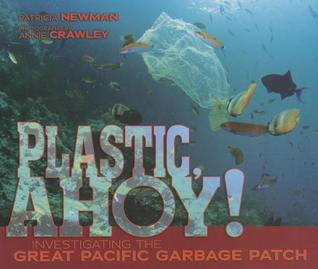
I had the opportunity to find out more about the complexities of writing this book and the way it can be used in classrooms on a recent chat with the author!
Thanks, Patricia, for being with us today and talking about Plastic Ahoy! The book brings a very huge dilemma to readers. What was the inspiration for
telling this story?
Every book I write comes with its own set of challenges. For me, the hardest part of any nonfiction project is deciding which format is best suited to my story. I chose a narrative format for two reasons—the plastic floating in the ocean is mysterious and that sense of mystery lent itself to storytelling. At the time I wrote the book, we didn’t know much about ocean plastic. The expedition was the epitome of the scientific method at work because the scientists went to sea armed only with questions. They didn’t know what they would find. The second reason I chose a narrative format was because I wanted to include specific information about each of the three wonderful scientists that I met. These women love science and I knew their passion would not only engage young readers, but hopefully interest them in science.
Plastic, Ahoy!’s message poses another challenge. The process of research and writing this book changed the way I look at the ocean and how the products I buy affect it. One of my goals in writing the book was to build a strong case for cleaning up our oceans and rivers and showing readers how to become more ecologically responsible. Now that readers are interacting with PLASTIC, AHOY! I hope they will change their own habits and help spread the message.
The inspiration for PLASTIC, AHOY! started with an article in my local
newspaper about graduate student scientists and volunteers who boarded a
research vessel in August 2009 to sail to what the media calls the Great
Pacific Garbage Patch. The Garbage Patch was first discovered by Captain
Charles Moore, but until 2009 it had not been scientifically studied. This
expedition funded by the Scripps Institute of Oceanography and Project Kaisei
would be among the first. While I followed the expedition blog, several facts
and fragments coalesced into a possible book idea—the age of the scientists,
the open ocean adventure, the “first-of” nature of the expedition and the fact
that we had the power to reduce ocean plastic. I traveled to San Diego to
interview some of the scientists after they returned to shore and I knew I had
a solid idea.
The researchers in the book spend countless hours at sea. Can you tell readers about your own research for this title?
The researchers in the book spend countless hours at sea. Can you tell readers about your own research for this title?
I proposed to my editor a nonfiction picture book for grades 3 through 6,
so I had space constraints to deal with, i.e. 3,500 to 4,000 words of text.
Seven graduate student scientists gathered observations and data for later
research based on this expedition, but I knew that I did not have space to
discuss all seven. I printed the expedition blog (all 21 days of it!) so I
could highlight and annotate. I chose scientists whose work would feature
different facets of ocean plastic: Miriam Goldstein (the lead scientist)
focused on the rafting community—the little critters who hitchhike aboard
plastic; Darcy Taniguchi studied phytoplankton—microscopic plants that provide
the oxygen for nearly two out of every three breaths we take; and Chelsea
Rochman studied the chemistry of plastic and how contaminants leach out of plastic
and also adhere to it.
I interviewed each scientist for several hours, studied up on the scientific terminology surrounding ocean plastic, watched expedition photographer Annie Crawley’s gorgeous videos of the expedition, and read everything about ocean plastic that I could find, both online and in print. It wasn’t until I started writing that I realized I had chosen three female scientists, which lent an element of “girl power” to an already powerful STEM concept.
Did you experience any challenges in writing this book?
I interviewed each scientist for several hours, studied up on the scientific terminology surrounding ocean plastic, watched expedition photographer Annie Crawley’s gorgeous videos of the expedition, and read everything about ocean plastic that I could find, both online and in print. It wasn’t until I started writing that I realized I had chosen three female scientists, which lent an element of “girl power” to an already powerful STEM concept.
Did you experience any challenges in writing this book?
Every book I write comes with its own set of challenges. For me, the hardest part of any nonfiction project is deciding which format is best suited to my story. I chose a narrative format for two reasons—the plastic floating in the ocean is mysterious and that sense of mystery lent itself to storytelling. At the time I wrote the book, we didn’t know much about ocean plastic. The expedition was the epitome of the scientific method at work because the scientists went to sea armed only with questions. They didn’t know what they would find. The second reason I chose a narrative format was because I wanted to include specific information about each of the three wonderful scientists that I met. These women love science and I knew their passion would not only engage young readers, but hopefully interest them in science.
Plastic, Ahoy!’s message poses another challenge. The process of research and writing this book changed the way I look at the ocean and how the products I buy affect it. One of my goals in writing the book was to build a strong case for cleaning up our oceans and rivers and showing readers how to become more ecologically responsible. Now that readers are interacting with PLASTIC, AHOY! I hope they will change their own habits and help spread the message.
The
photographs in Plastic Ahoy really bring the story to life. Can you share with
us your working relationship with photographer, Annie Crawley?
Annie Crawley and I met because
of Plastic, Ahoy! (Actually, we still
haven’t met face-to-face, but we talk on the phone a lot!) I contacted Annie
after the expedition returned to shore to be sure she was on board with the
project. She and I scrolled through thousands of images and video of the
expedition looking for just the right shot, the right angle, the perfect photo
that showed how scientists lived and worked on board New Horizon. Annie’s photos capture the enormity of the plastic
problem. She also used her award-winning video talents to create our dynamite booktrailer .
Annie is tireless in her defense of the ocean. She’s a noted ocean speaker, a member of the Women Divers Hall of Fame and the CEO of Dive Into Your Imagination. Annie runs dive camps for kids and photography camps for any age. I am so lucky to have her photos grace Plastic, Ahoy! and we look forward to working on another project together (we have two ideas we’re currently considering).
This book hits on some important core curriculum standards. Any suggestions for using it in the classroom?
Annie is tireless in her defense of the ocean. She’s a noted ocean speaker, a member of the Women Divers Hall of Fame and the CEO of Dive Into Your Imagination. Annie runs dive camps for kids and photography camps for any age. I am so lucky to have her photos grace Plastic, Ahoy! and we look forward to working on another project together (we have two ideas we’re currently considering).
This book hits on some important core curriculum standards. Any suggestions for using it in the classroom?
I used to teach remedial math to high school students, so I understand that
real world examples can facilitate learning. In addition to cutting-edge
information about ocean plastic, PLASTIC, AHOY! provides a fabulous segue to
the scientific method. My Teacher Guide
<http://patriciamnewman.com/CCSSPlasticAhoyGuide.pdf>
(http://patriciamnewman.com/CCSSPlasticAhoyGuide.pdf <http://patriciamnewman.com/CCSSPlasticAhoyGuide.pdf>
) is aligned with the
Common Core State Standards and the Next Generation Science Standards. The
guide contains a variety of activities that stress vocabulary for the ocean and
the scientific method; the ocean food web and how energy is transferred to each
organism; forming a hypothesis; and (my favorite) a math activity where
students conduct a waste audit analysis of their homes. The last few pages of
the activity guide lists in table form the CCSS and NextGen standards covered
by each activity.
What’s next for your readers?
What’s next for your readers?
Four nonfiction
novelty board books will be released in the fall of 2015 and spring of 2016. I
love these books and am very excited to see how the parents of toddlers react
to them. Additionally I have several projects—both fiction and nonfiction—that
have just been submitted for an editor’s consideration or will be submitted soon.
Thank you, Patricia! This has been great. Plastic Ahoy! is a must for classroom bookshelves. It seems like this topic appears again and again in the news. Thanks for providing readers with a good resource!
Find out more about Patricia's books at http://www.patriciamnewman.com
Thank you, Patricia! This has been great. Plastic Ahoy! is a must for classroom bookshelves. It seems like this topic appears again and again in the news. Thanks for providing readers with a good resource!
Find out more about Patricia's books at http://www.patriciamnewman.com
Monday, June 23, 2014
Nonfiction Monday - Midsummer's Eve
Tonight is Midsummer's Eve! It is also called St. John's Eve, after St. John, the patron saint of beekeepers. This is a time when the hives should be filled with honey. One of the names for the full moon this month is the Mead Moon, because mead was made out of fermented honey.
So, I thought it would be a great day to blog about bees and books. As many of you know they've hit a rough patch. Bees that is. Bees need some PR among other things. Forget the stinger, think honey!
There are a ton of kids books out there about bees, but my favorite nonfiction read for kids is The Hive Detectives by Loree Griffin Burns.

Author Loree Griffin Burns not only presents the crisis honey bees are facing, but profiles the scientists and beekeepers on the front lines. The book has amazing photographs and should be in every classroom collection.
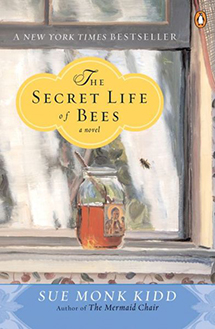
I know this is Nonfiction Monday, but I can't help noting two fiction titles. The Secret Life of Bees by Susan Monk Kidd is a beautiful and perfect read for teens.


So, I thought it would be a great day to blog about bees and books. As many of you know they've hit a rough patch. Bees that is. Bees need some PR among other things. Forget the stinger, think honey!
There are a ton of kids books out there about bees, but my favorite nonfiction read for kids is The Hive Detectives by Loree Griffin Burns.
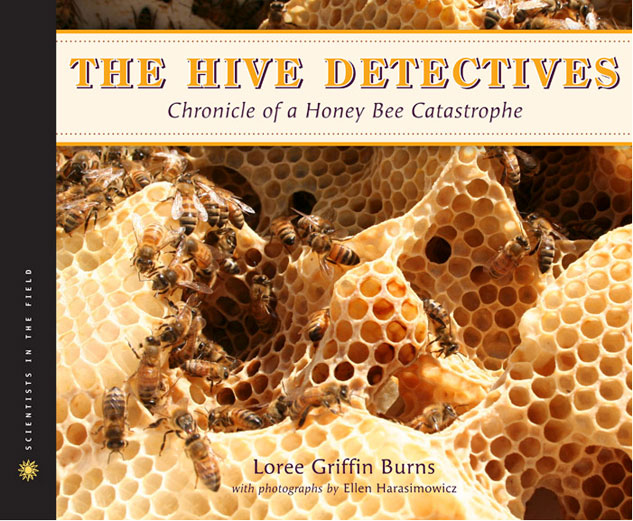
Author Loree Griffin Burns not only presents the crisis honey bees are facing, but profiles the scientists and beekeepers on the front lines. The book has amazing photographs and should be in every classroom collection.
I know this is Nonfiction Monday, but I can't help noting two fiction titles. The Secret Life of Bees by Susan Monk Kidd is a beautiful and perfect read for teens.
And I'm excited to read The Bees by Laline Paull. It's gotten a lot of buzzzzzz. It's got a strong dystopian feel to it and is actually set in a hive. Perhaps it will become a great crossover read.

Friday, June 20, 2014
Eco-Fiction Friday! Interview with Eliot Schrefer
I had the opportunity to meet and speak with author Eliot Schrefer at the Red Hook Book Festival. His book, Endangered, was a National Book Award Finalist for Young People's Literature. It also garnered a starred review in Publishers Weekly and praise from Kirkus, ALA, NPR and a host of others. All well-deserved!

Endangered is a compelling
story set in war-torn Congo. Please share with us your experiences researching
this story in such a dangerous place?
First, I want to say thanks
for having me! It’s a treat to visit your blog. To answer your question, I
traveled to a sanctuary for orphaned bonobos, called Lola ya Bonobo (“Bonobo
Paradise” in the local language, Lingala), in order to research the book.
Though I was visiting Congo, I think of it as “Congo Lite.” They picked me up
from the airport, I stayed on the sanctuary grounds for two weeks, and then
they drove me back. It’s a beautiful, well-run place. Each morning I would
spend time with the orphans, then I would write in the afternoons. It was great
to be able to spend extended time with them—what changed most during my
research were the physical details, what bonobos feel like or even smell like.
What inspired you to write about bonobos?
A pair of pants! I bought a pair of Bonobos brand khakis, and thought it was a nonsense word. Then I looked them up and learned about this fourth great ape that I’d never heard about before. Once I knew their connection to us (98.7% DNA overlap) and their plight (struggling to survive in central Congo) I realized there was enough thematic information to write a novel.
You’ve managed to weave in so much information about the science of bonobos and their status in this novel without any “information dumps”. What challenges did you experience in doing this?
What inspired you to write about bonobos?
A pair of pants! I bought a pair of Bonobos brand khakis, and thought it was a nonsense word. Then I looked them up and learned about this fourth great ape that I’d never heard about before. Once I knew their connection to us (98.7% DNA overlap) and their plight (struggling to survive in central Congo) I realized there was enough thematic information to write a novel.
You’ve managed to weave in so much information about the science of bonobos and their status in this novel without any “information dumps”. What challenges did you experience in doing this?
I always hate in a movie
when the main character happens to walk by a college lecture hall, and pauses
for a minute to hear whatever the academic is lecturing about—which is, of
course, always germane to the movie’s events. Books have a little more leeway,
I think, because there’s a chance to hear a character’s internal thoughts. But
all the same, as you say, info dumps are a real problem. Most of the research
that I was able to work into the book was about their physical lives—how they
nest, how they fight, the texture of their hair, etc.—because those were things
Sophie was observing, herself. I tried to minimize times where I’d go “Sophie
remembered reading that...”. All the same, I think readers love feeling like
their gaining new information. It just has to be presented inconspicuously.
Your next book, Threatened, focuses on another primate. Can you share the differences you encountered with your research on this book?
Your next book, Threatened, focuses on another primate. Can you share the differences you encountered with your research on this book?
Threatened is about
chimpanzees, and anyone who’s read Endangered knows they come off as villains
there. But what helped me come around to them immensely were the memoirs of
Jane Goodall. She writes about generations of the Gombe chimps she studied in
Tanzania, and their stories are totally gripping. Her writing really encouraged
me to look at chimp behavior as family stories above all. One chimp’s welfare
has everything to do with how it was raised.
 |
| *Starred reviews from both Kirkus and Publisher's Weekly |
What’s next for your readers?
I’m sure readers will be interested in learning more about the plight of these extraordinary primates. Can you point them to any organizations for more information?
Absolutely. There are two main organizations that work on bonobo welfare. One is Friends of Bonobos (www.friendsofbonobos.org <http://www.friendsofbonobos.org> ), which helps run the sanctuary where I stayed in Congo. Another is the Bonobo Conservation Initiative (www.bonobo.org <http://www.bonobo.org> ), which works on keeping the wild bonobos alive and well. Both very worthy organizations.
Thanks again for having me, Nancy!
It's been a pleasure, Eliot! For more information about Eliot and his books check out his website.
Friday, June 13, 2014
Community Garden - Reads and Weeds
I love my plot in our community garden!
 Everything is doing well. The kale and swiss chard have taken hold and are loving the weather. The tomatoes are flowering. And my squash is spreading. Along with all that growth came a new batch of weeds. Since this garden was left untended last year it needs a little extra loving this season.
Weeds compete with your plants for nutrients and water. I've been hand-pulling pretty regularly to keep it clean. I will need to get back on it soon since we've had a rainy week.
In between the rain and the weeding there's always reading! Here are some of my favorite garden reads for kids.
Weeds compete with your plants for nutrients and water. I've been hand-pulling pretty regularly to keep it clean. I will need to get back on it soon since we've had a rainy week.
In between the rain and the weeding there's always reading! Here are some of my favorite garden reads for kids.
 |
| Sharon Lovejoy's classic! |
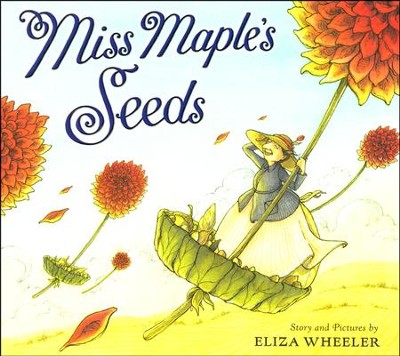 |
| Miss Maple's Seeds |
 |
| A Seed is Sleepy |
And be sure to check out Jane Goodall's Roots and Shoots Organization for some great community projects.
Tuesday, May 20, 2014
Community Garden - Seedling Shopping Day!
The garden has been weeded, tilled and raked. It's set to plant! But with frost warnings popping up throughout the month I haven't planted anything yet. It's now May 20th and it's finally warm enough. Seedling shopping day!
Shopping List:
Zucchini
Basil
Black Cherry Heirloom tomato
Sungold Heirloom tomato
Jalapeño
Cilantro
Swiss Chard
Russian Kale
Mixed zinnias
Tomorrow - Planting day!!!!
Shopping List:
Zucchini
Basil
Black Cherry Heirloom tomato
Sungold Heirloom tomato
Jalapeño
Cilantro
Swiss Chard
Russian Kale
Mixed zinnias
Tomorrow - Planting day!!!!
Tuesday, May 6, 2014
Community Garden Day 2
Every garden owner must sign up for a time to mow the pathways. This was our week. Nancy went down ahead of me and did it. Not only did she take care of the mowing, but she tilled our plot. YAY NANCY!!! I was left with some clean-up -- and the raking and leveling. It looks ready to go - we just need to plan it out now.
I've been researching some varieties that work well in our area. So far on my list - Russian or green kale, zinnias, and zucchini.
More to come!
I've been researching some varieties that work well in our area. So far on my list - Russian or green kale, zinnias, and zucchini.
More to come!
Monday, May 5, 2014
Community Garden Day 1
My friend and I decided to join our community garden this year. We both have enough land to have our own gardens at our homes, but the community garden offered us a lot of benefits. First, it's already established. It has a fence to keep out animals and a shed for equipment - which includes a tiller, a lawnmower, shovels, hoes, rakes, etc. Everything is right there! It's also in an accessible location in the village.
Well, we found out another huge benefit yesterday afternoon. The community! It was our first scheduled work day and we really weren't sure what to expect. I came prepared with some hand tools and gloves ready to get to work.
Our garden was a mess - very overgrown. It had not been tended for over a year.
Well, we found out another huge benefit yesterday afternoon. The community! It was our first scheduled work day and we really weren't sure what to expect. I came prepared with some hand tools and gloves ready to get to work.
Our garden was a mess - very overgrown. It had not been tended for over a year.
 |
| Our garden - The Before photo! |
 |
| The well tended plots near ours. |
 |
| In need of LOTS of work. |
The sky was clear when we arrived at 4 pm, but there had been a downpour within the hour. It made the ground easy to dig and we got to work right away. Soon other gardeners arrived and they all grabbed tools and headed over to our plot. We were the "newbies" and they were all there to help us get it in shape for the season!
Before we knew it there were 8 of us digging weeds and clearing the ground. Now that's community!
Before we knew it there were 8 of us digging weeds and clearing the ground. Now that's community!
It rained. It cleared. And it rained again. Wheelbarrow after wheelbarrow was filled and dumped. By 5:30 pm we were weed-free and level!
 |
| The Community Garden |
 |
| That's us - Nancy and Nancy - The after picture - In the rain. |
 |
| Almost ready for planting! |
What a great experience! I've always hated weeding. It was one of my childhood chores and I actually paid other kids to help me get it done.
This weeding project was actually FUN! Next up for us - Garden planning and planting!
I'll keep you updated!
This weeding project was actually FUN! Next up for us - Garden planning and planting!
I'll keep you updated!
Subscribe to:
Posts (Atom)
Happy SEED SWAP DAY!
In light of the celebration of SEED SWAPPING DAY on January 31st, I'm posting this blog post again with a few updates -- so SEED ON! ...

-
 As programs are canceled throughout the country and modes of revenue dry up during this pandemic, here is a list of resources for freelance ...
 -
I love to travel. I'm one of those people that get butterflies of excitement anytime I am near an airport. I follow #roamtheplanet an...